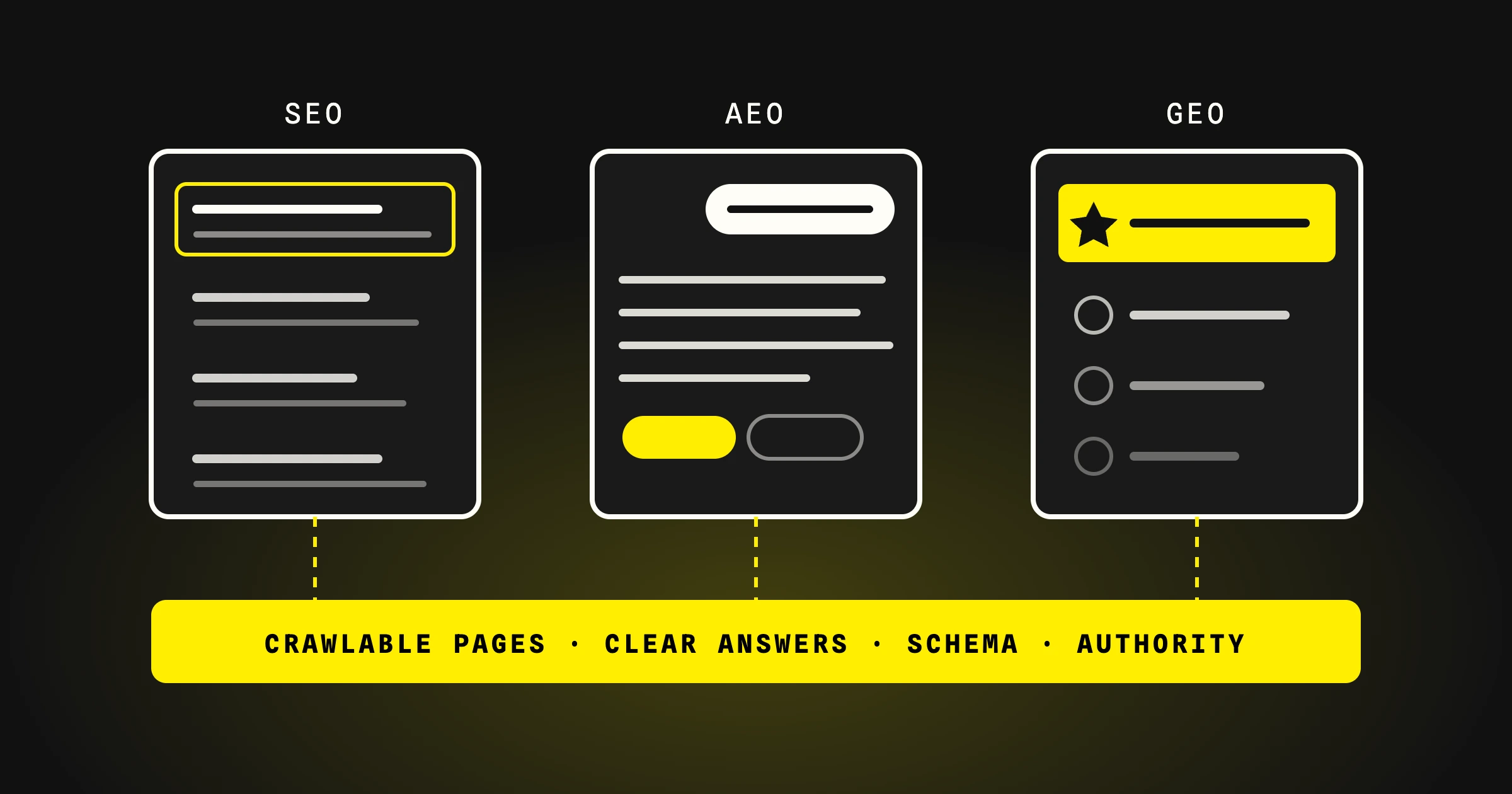
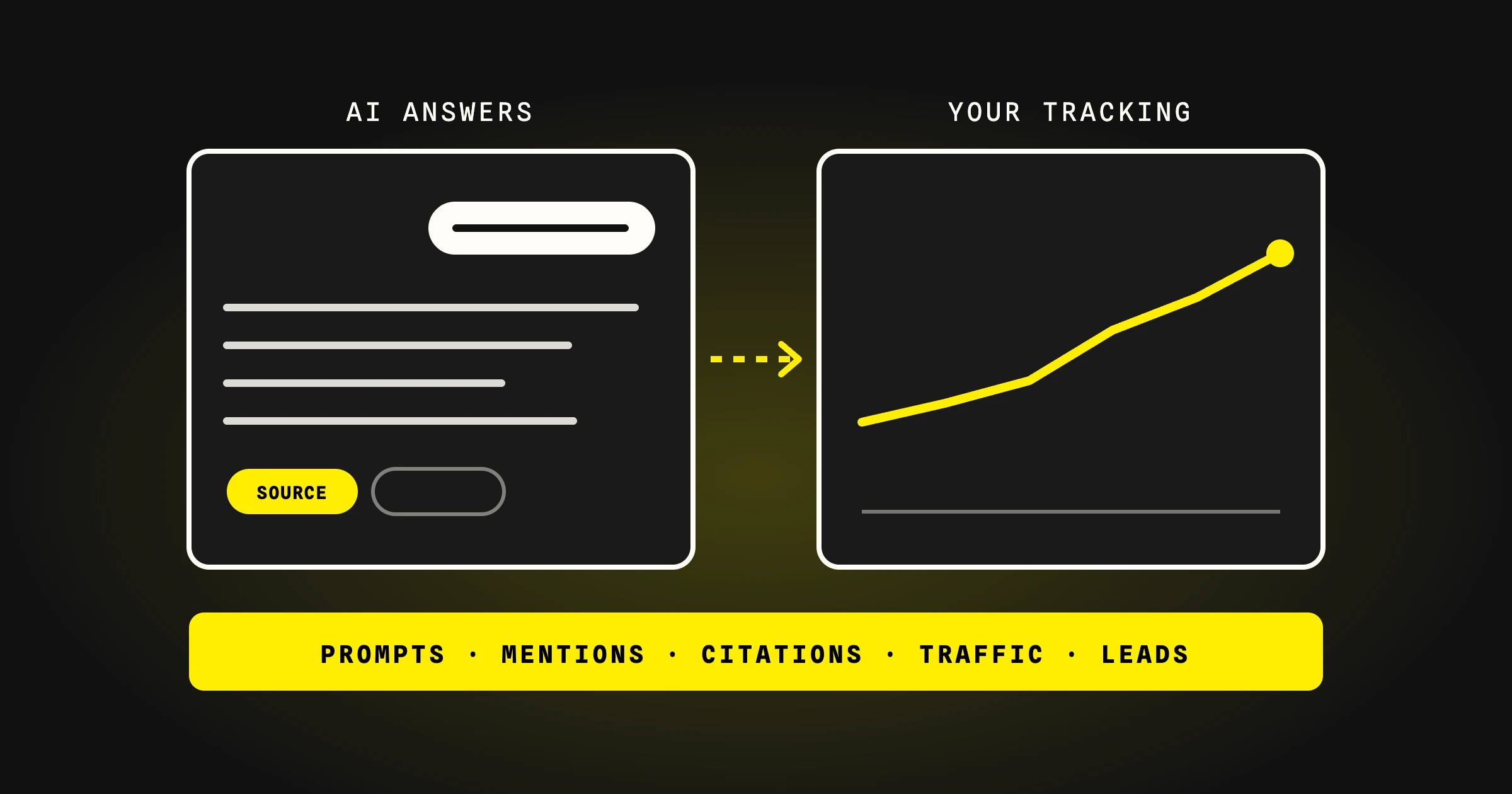
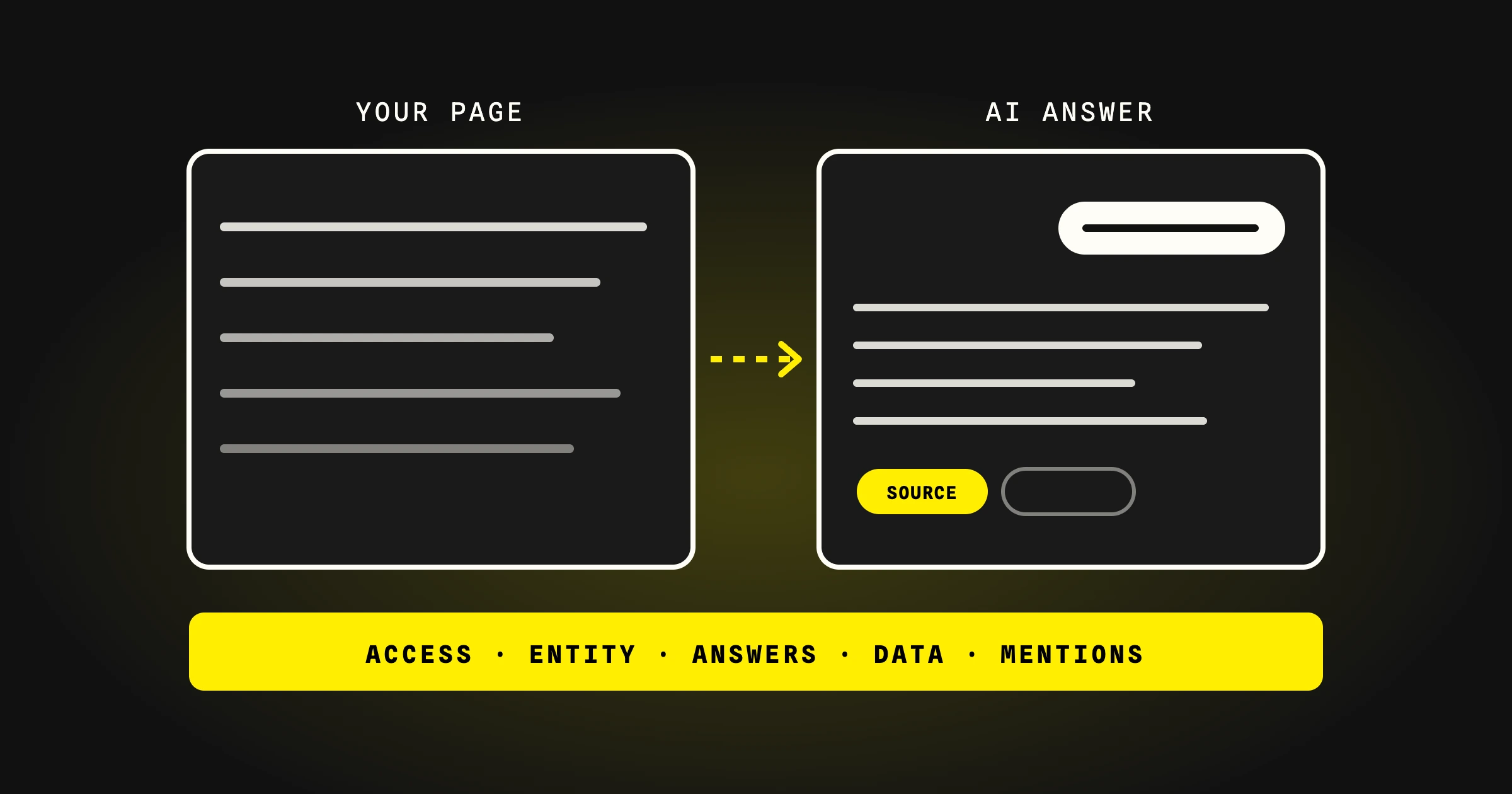
SEO gets your pages ranked in search results, AEO gets your content quoted in AI answers, and GEO (generative engine optimization) shapes how AI systems describe and recommend your brand. They share most of their foundations, so the best plan treats them as one program.
In short
SEO ranks pages, AEO gets them quoted in AI answers, and GEO shapes how AI systems describe and recommend your brand.
GEO here means generative engine optimization, not local geo-targeting.
Most of the work is shared: crawlable pages, clear structure, matching schema and authority.
Start with SEO foundations on the pages that bring in leads, then add AEO and GEO on top of those same pages.
Lower CTR for the #1 result
34.5%
lower average click-through rate for the top-ranking page when an AI Overview appears (Ahrefs, 2025)
ChatGPT weekly users
800M
weekly active users, announced by OpenAI in October 2025 (TechCrunch)
Mentions vs AI visibility
0.664
correlation of brand mentions with AI Overview visibility, vs 0.218 for backlinks (Ahrefs, 2025)
The Short Answer
SEO (search engine optimization) gets your pages ranked in Google's results. AEO (answer engine optimization) gets your content quoted inside AI-written answers. GEO here means generative engine optimization, not local geo-targeting: the work of shaping how AI systems such as ChatGPT, Perplexity and Gemini describe and recommend your brand. They are three views of the same job, and they share most of their foundations.
SEO vs AEO vs GEO: Side-by-Side Comparison
Factor
SEO
AEO
GEO
Main goal
Rank pages in search results
Be quoted as a source in AI answers
Be described correctly and recommended by AI systems
Where it shows
Google and Bing results pages
AI Overviews, ChatGPT, Perplexity, Gemini answers
AI shortlists, comparisons and recommendations
Typical success metric
Rankings, organic traffic, conversions
Citations for a set of buyer questions
Mentions and recommendations, accuracy of what AI says about you
Partly. Most of what helps you get cited by AI assistants is good SEO: pages that can be crawled and indexed, clear structure, useful content, and authority from other sites. What changes is the finish line. Ranking first is no longer the whole goal; you also want to be the source an assistant quotes and the brand it names when a buyer asks what to choose.
That adds a few specific tasks, such as direct answers at the top of sections, consistent facts about your company across the web and tracking citations, but it does not replace SEO.
34.5%
Ahrefs · April 2025
Lower average click-through rate for the top-ranking page when a Google AI Overview appears, across 300,000 keywords. Ranking first is no longer the whole goal.
Where SEO, AEO and GEO Overlap
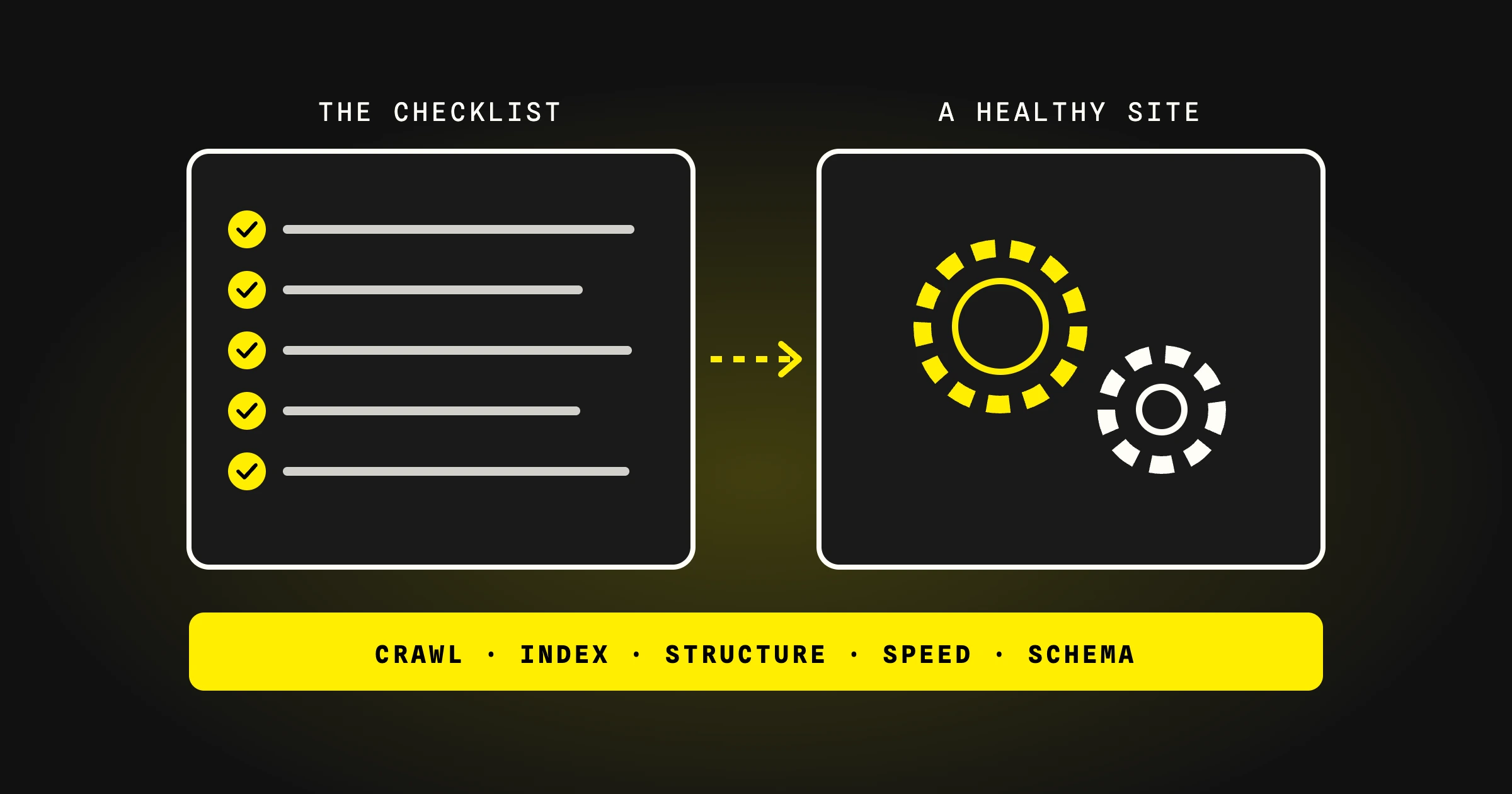
Crawlable, fast pages. AI systems can only cite what they can read.
Clear structure. Headings that match real questions help both rankings and extraction.
Structured data. Organization, Service, Article and FAQ markup help search engines and AI systems understand the page.
Authority. Links and mentions from trusted sites support rankings and AI recommendations.
Where They Differ
Answer format. AEO puts a self-contained 40 to 60 word answer under each main heading so it can be quoted as is.
Brand mentions. GEO weighs unlinked mentions, reviews and community discussion more heavily than classic link building does.
Measurement. SEO tracks rankings and traffic; AEO and GEO track citations and recommendations across a fixed set of buyer questions.
Brand mentions track AI visibility more closely than links. In Ahrefs' study of 75,000 brands, branded web mentions correlated with AI Overview visibility at 0.664, against 0.218 for backlinks.
What to Do First
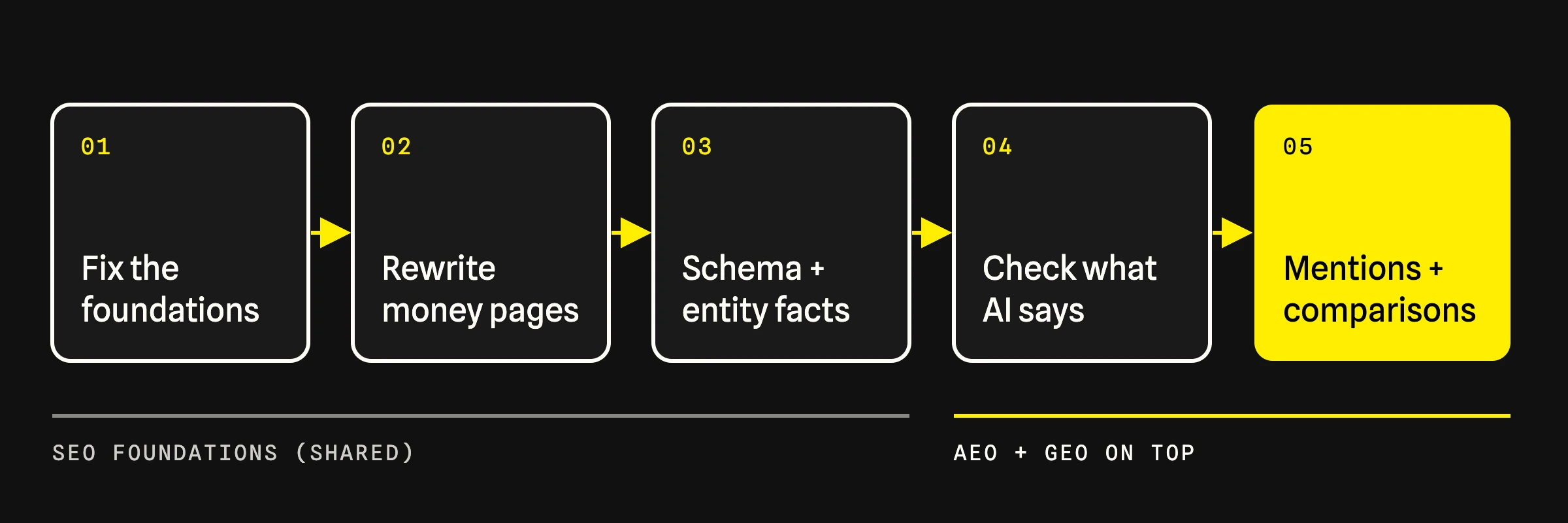
The order we work in: shared SEO foundations first, then AEO and GEO on top.
Fix the foundations. Make sure your key pages are indexed, fast and free of technical errors. Without this, nothing else works.
Rewrite the openings of your money pages. Add a direct answer, question-led headings and an FAQ that matches what buyers ask.
Add matching schema and consistent entity facts. Describe your company, services and people the same way everywhere.
Check what AI says about you. Run your buyers' questions through the main assistants and note where you appear and where competitors do instead.
Build mentions and comparison content. Earn coverage where your buyers research and publish honest comparison pages.
Treat SEO, AEO and GEO as one program with one owner. Get the foundations right on the pages that bring in leads, then make those pages easy to quote and make sure the rest of the web describes you correctly.
New to the topic? Start with What is AEO?. If traffic is falling while rankings hold, read Is SEO dead?. To see where you stand today, our AEO audit checks what AI assistants say about you, and our AEO agency team implements the fixes.
FAQ
Do I need separate teams or agencies for SEO, AEO and GEO?
No. The work overlaps so much that splitting it usually creates gaps. One team should own technical SEO, content, structured data and AI visibility tracking together.
Which should a B2B company start with?
Start with SEO foundations on the pages that already bring in leads, then layer AEO on top of those same pages. GEO work on mentions and reviews runs alongside as an ongoing effort.
What does GEO mean in local marketing?
In local marketing, "geo" often refers to location targeting. In AI search, GEO means generative engine optimization. When you brief a team, say which one you mean.
5.0 on Clutch · 350+ companies served
Get a Free SEO Report.
A senior strategist reviews your site and walks you through it on a 30-minute call. No sales pitch, and you keep the report either way. It includes:
Andrés founded Digital Socios and Glued and leads Digital Socios' AI search work. He has spent 8+ years building websites and user experiences for brands like Nestlé, Vital Proteins and Pfizer.