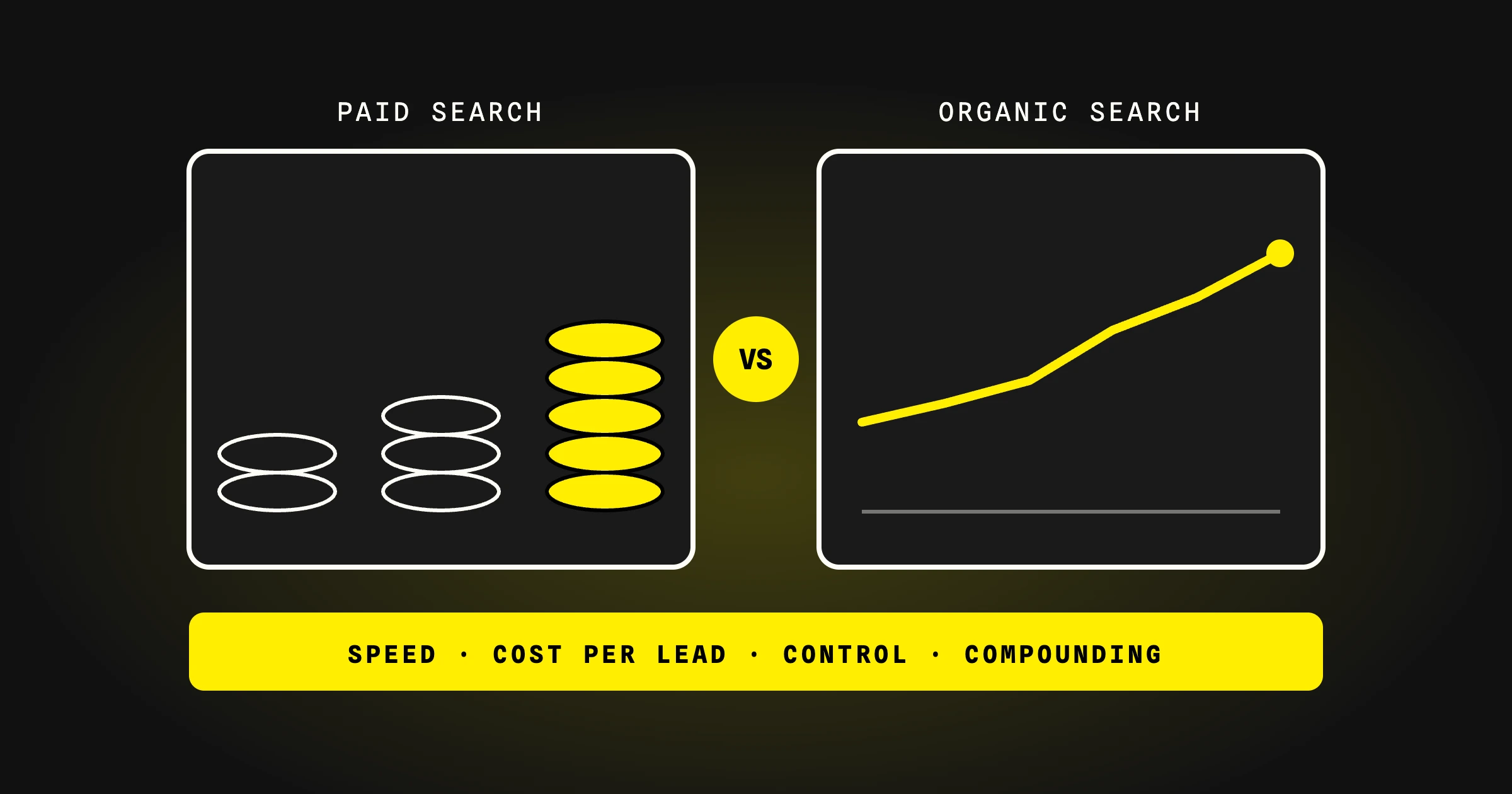
SEO earns visits from unpaid search results and takes months to build, but its cost per lead falls over time. PPC buys visits through ads, starts within days and stops when the budget does. Most growth-stage companies need both: PPC for leads now, SEO so that leads keep coming without paying for every click.
In short
PPC is fast and controllable; SEO is slow to start and compounds.
The median Google Ads cost per lead was $70.11 in 2025 and rising, so every paid lead costs about the same or more next year.
SEO spend stays fairly flat while results build, so its cost per lead should fall from year one to year two.
AI assistants cite pages, not ads. Only SEO work gets you into those answers.
Start with both, then move budget from ads to SEO on the searches where you now rank.
Median Google Ads cost per lead
$70.11
median cost per lead across 16,446 US search campaigns, up 5.13% year over year (WordStream, 2025)
Median Google Ads cost per click
$5.26
median cost per click across industries, up 12.88% year over year (WordStream, 2025)
Before SEO shows results
4 to 12 mo
the time SEOs need to implement improvements and then see potential benefit, according to Google's Maile Ohye (2017)
What Is the Difference Between SEO and PPC?
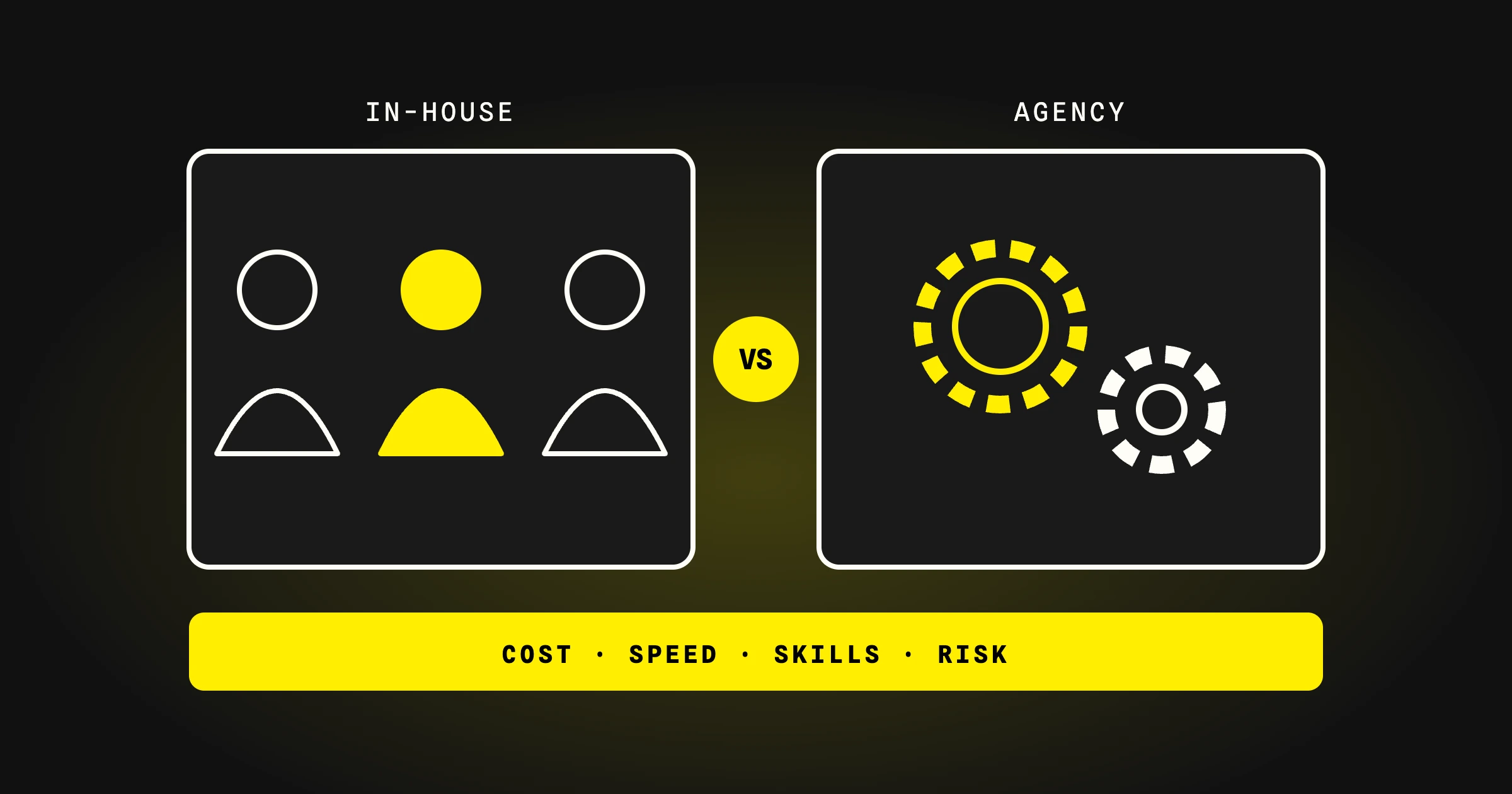
SEO (search engine optimization) is the work of earning visits from the unpaid results in Google and from AI answers. PPC (pay-per-click) is advertising where you pay each time someone clicks your ad, most often through Google Ads. Both put you in front of people who are searching. They differ in how fast they start, what they cost over time and what happens when you stop paying.
Factor
SEO
PPC
Time to first leads
Months
Days
What you pay for
The work: fixes, content, authority
Every click
Cost per lead over time
Falls as results build
Flat or rising
When you stop paying
Results fade slowly
Leads stop the same day
Control
Low: Google decides rankings
High: you set budget, terms and message
Trust
Earned results; cited by AI assistants
Labelled as sponsored
Best for
Buyers researching and comparing
Buyers ready to act now
What Does PPC Cost?
WordStream's 2025 benchmarks cover 16,446 US search campaigns. The median cost per click was $5.26, up 12.88% on the year before, and the median cost per lead was $70.11, up 5.13%. For business services, the cost per lead was $103.54.
$70.11
WordStream · Google Ads Benchmarks 2025
Median cost per lead on Google search ads, up 5.13% in a year. With PPC, lead number 1,000 costs about what lead number one did, or more.
That is the nature of the channel. You rent the position. The price is set by an auction, and the auction has been getting more expensive.
What Does SEO Cost?
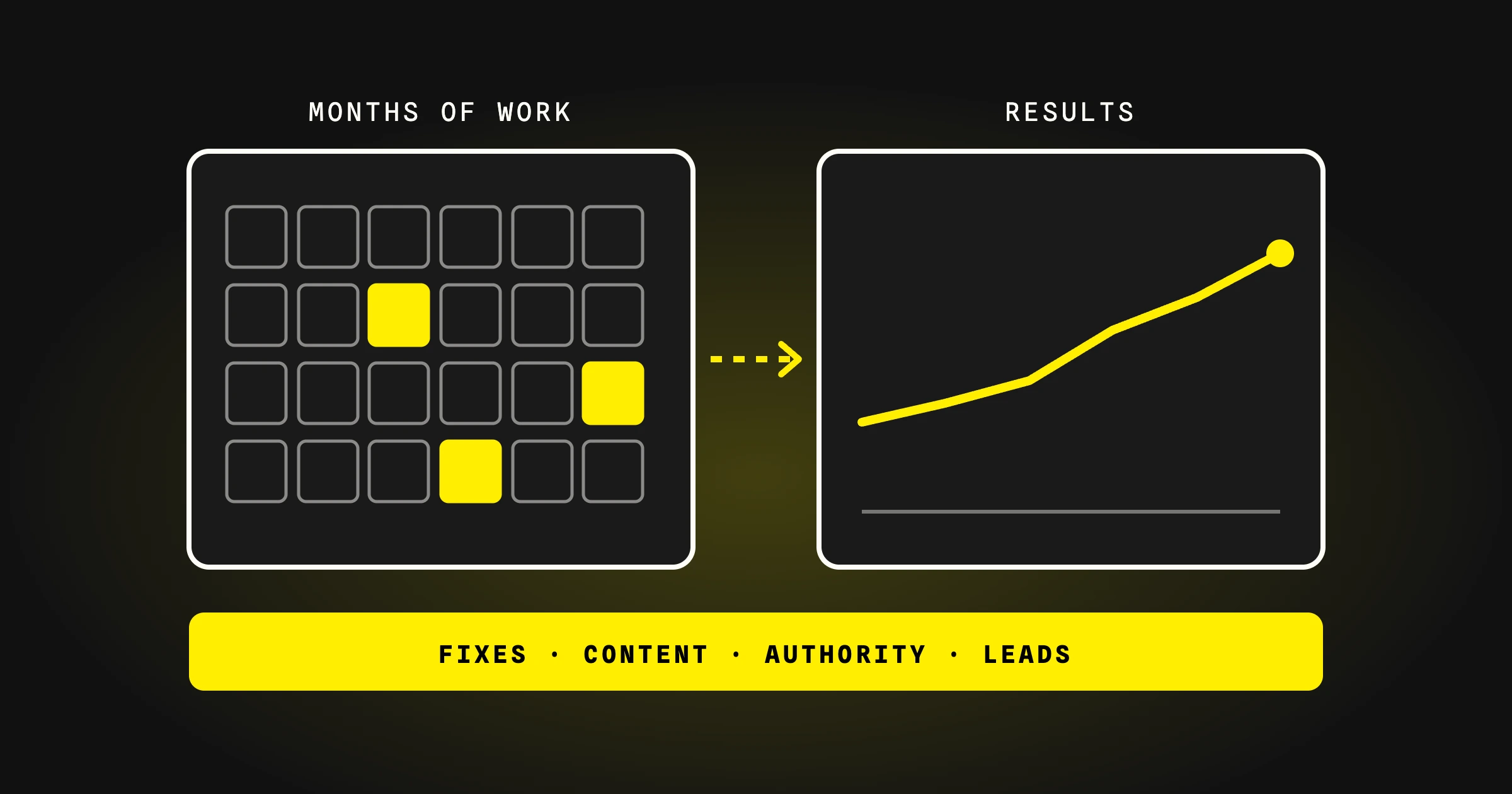
SEO is paid for as work, usually a monthly retainer, and the cost does not rise with each visit. The catch is time: Google's own estimate is four months to a year to implement improvements and see the benefit. So in the early months SEO has a cost and few leads, and its cost per lead looks worse than PPC. As pages start to rank, the same monthly spend produces more leads each quarter, and the cost per lead falls.
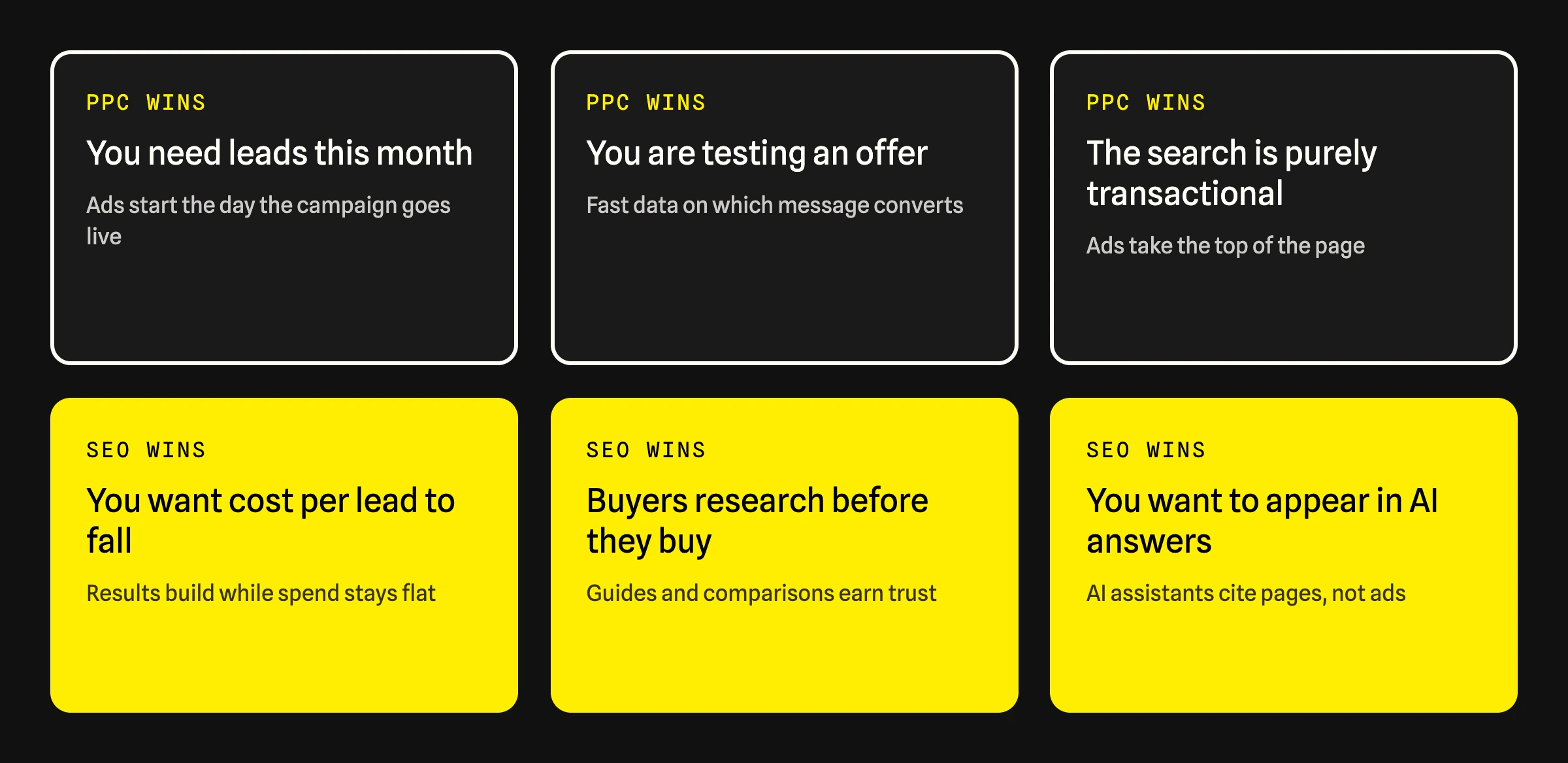
You need leads this month and have no organic presence yet.
You are testing a new offer or message and want data fast.
The search is transactional and ads fill the top of the page.
Choose SEO first when:
Your buyers research and compare for weeks before they contact anyone.
You want a source of leads that does not cost more every year.
You want to be named when buyers ask an AI assistant for a shortlist.
How Does AI Search Change the Choice?
Two things have shifted. First, Google now answers many questions itself: Pew Research Center found users clicked a result in 8% of visits when an AI summary appeared, against 15% without one. Second, buyers ask ChatGPT, Gemini and Perplexity for recommendations, and those assistants build answers from pages they can read and trust, not from ads.
So PPC still buys clicks on Google, but it does not put you in an AI answer. The work that does is the same work SEO has always needed: clear pages, direct answers and a brand other sites mention. See how to get cited in AI answers.
Use your ads data to plan SEO. The search terms that convert in Google Ads are the ones worth ranking for. Build your SEO plan around them and you skip months of guessing.
How Should You Split the Budget?
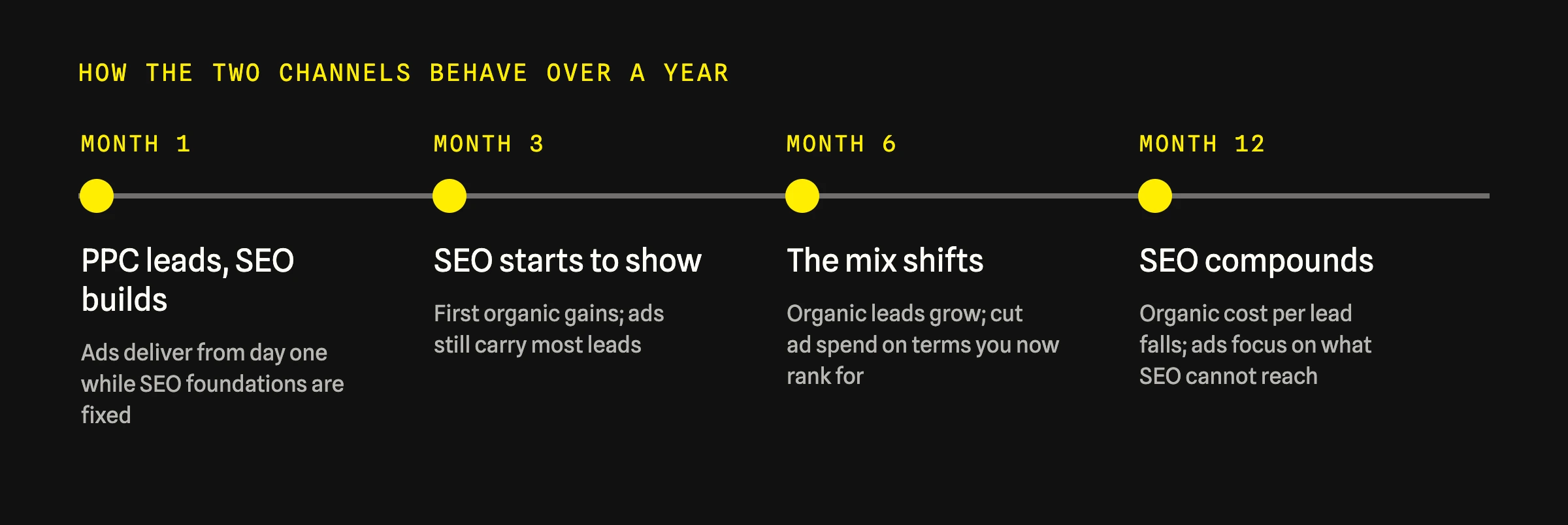
There is no fixed ratio. A sensible path over the first year looks like this:
How the mix usually shifts over twelve months.
Months 1 to 3. Ads carry lead generation. SEO fixes the site and rewrites the pages closest to revenue.
Months 3 to 6. Organic rankings and leads begin. Keep ad spend steady and watch which terms you now rank for.
Months 6 to 12. Where you rank well, reduce ad spend on those terms and compare total leads. Keep ads on terms SEO cannot reach yet.
After month 12. Ads become a tool for launches, tests and the most competitive terms. SEO carries the base.
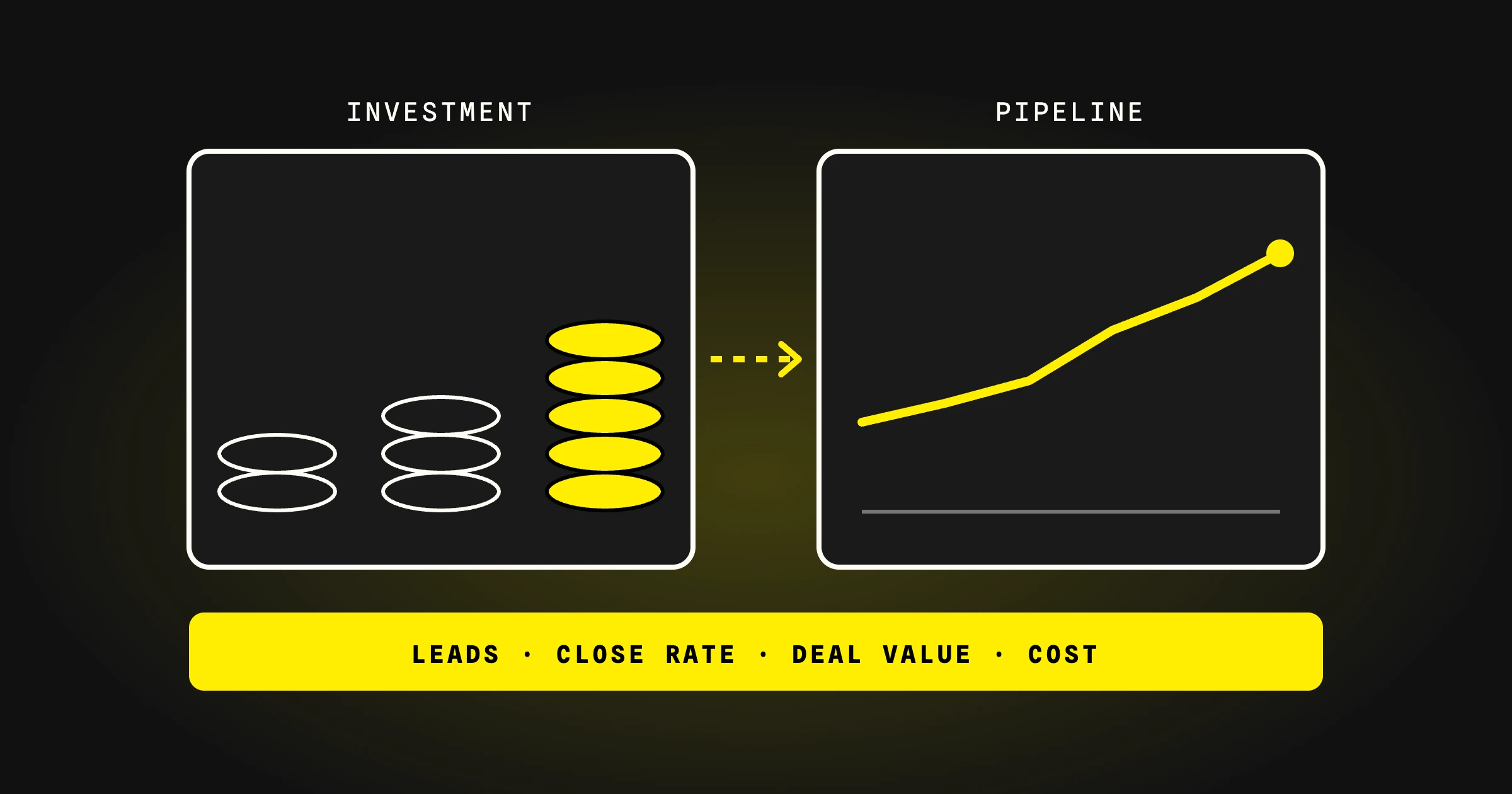
Compare the two on the same measure: cost per lead and cost per closed deal, by quarter. Our guide to SEO ROI shows how to calculate both.
The Bottom Line
PPC and SEO are not rivals. PPC buys speed and SEO builds an asset. If you can only fund one, choose by urgency: ads if you need leads this quarter, SEO if you can invest for the year. If you can fund both, let ads pay the bills while SEO lowers what each lead costs.
To see what your site could rank for today, start with a free SEO report, or see how our SEO services team works. Still unsure SEO is worth it? Read Is SEO dead?
FAQ
Is SEO better than PPC?
Neither is better in every case. PPC produces leads within days at a steady or rising cost per lead. SEO takes months to start and its cost per lead falls over time. Most companies use PPC for speed and SEO for lower cost in the long run.
Is SEO worth it if we already run Google Ads?
Usually yes. Ads stop producing the day you stop paying, and the median cost per lead on Google Ads rose 5.13% in 2025. SEO builds a source of leads that does not charge per click, and it is the only route into AI answers.
Can SEO replace PPC completely?
Rarely. Ads remain useful for launches, testing messages and very competitive searches. The realistic goal is to rely on ads less as organic results grow.
Does running Google Ads help SEO rankings?
No. Paying for ads does not improve organic rankings. Ads do help indirectly: they show which search terms convert, which tells you what to target with SEO.
5.0 on Clutch · 350+ companies served
Get a Free SEO Report.
A senior strategist reviews your site and walks you through it on a 30-minute call. No sales pitch, and you keep the report either way. It includes:
Andrés founded Digital Socios and Glued and leads Digital Socios' AI search work. He has spent 8+ years building websites and user experiences for brands like Nestlé, Vital Proteins and Pfizer.