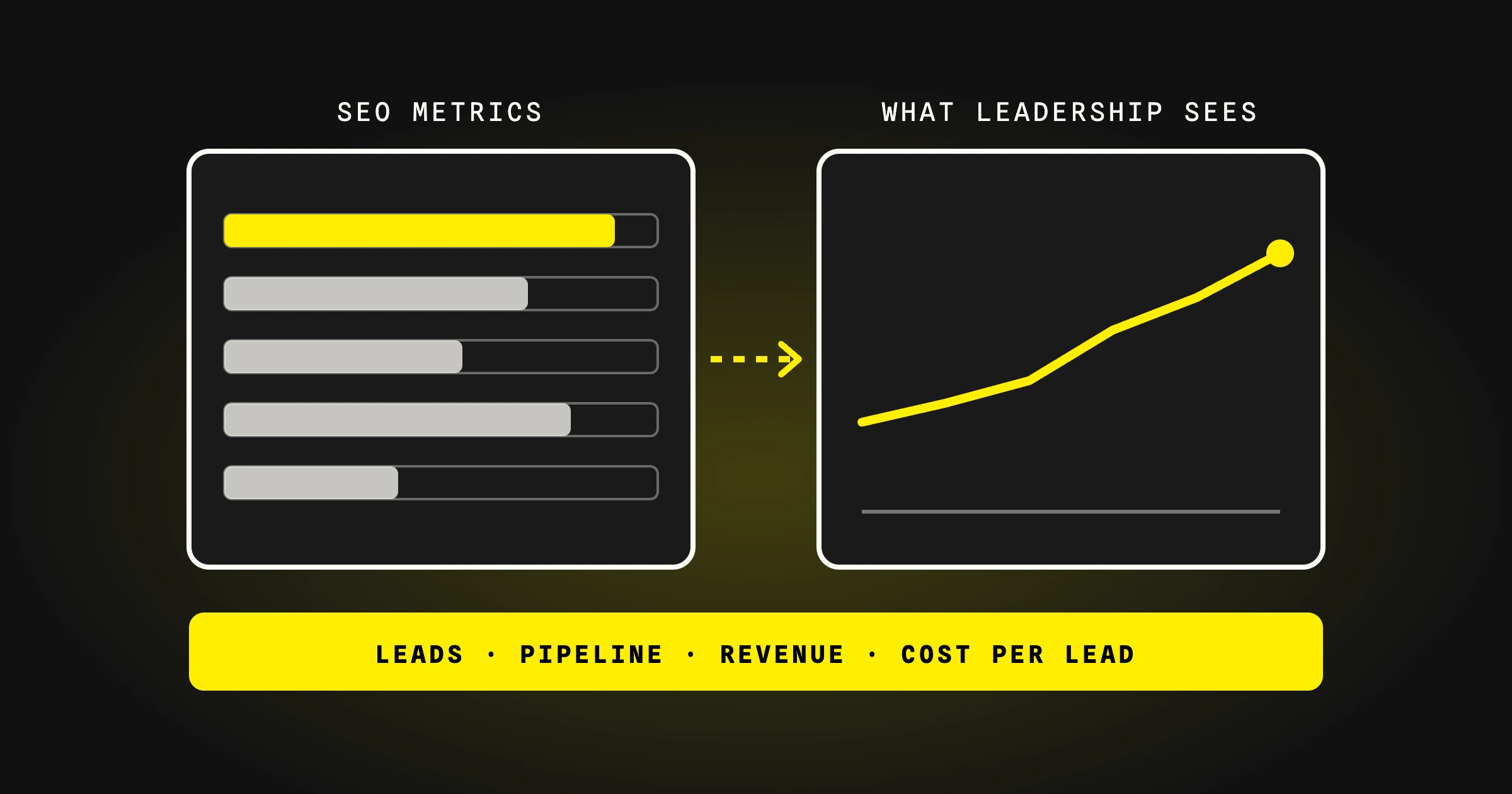
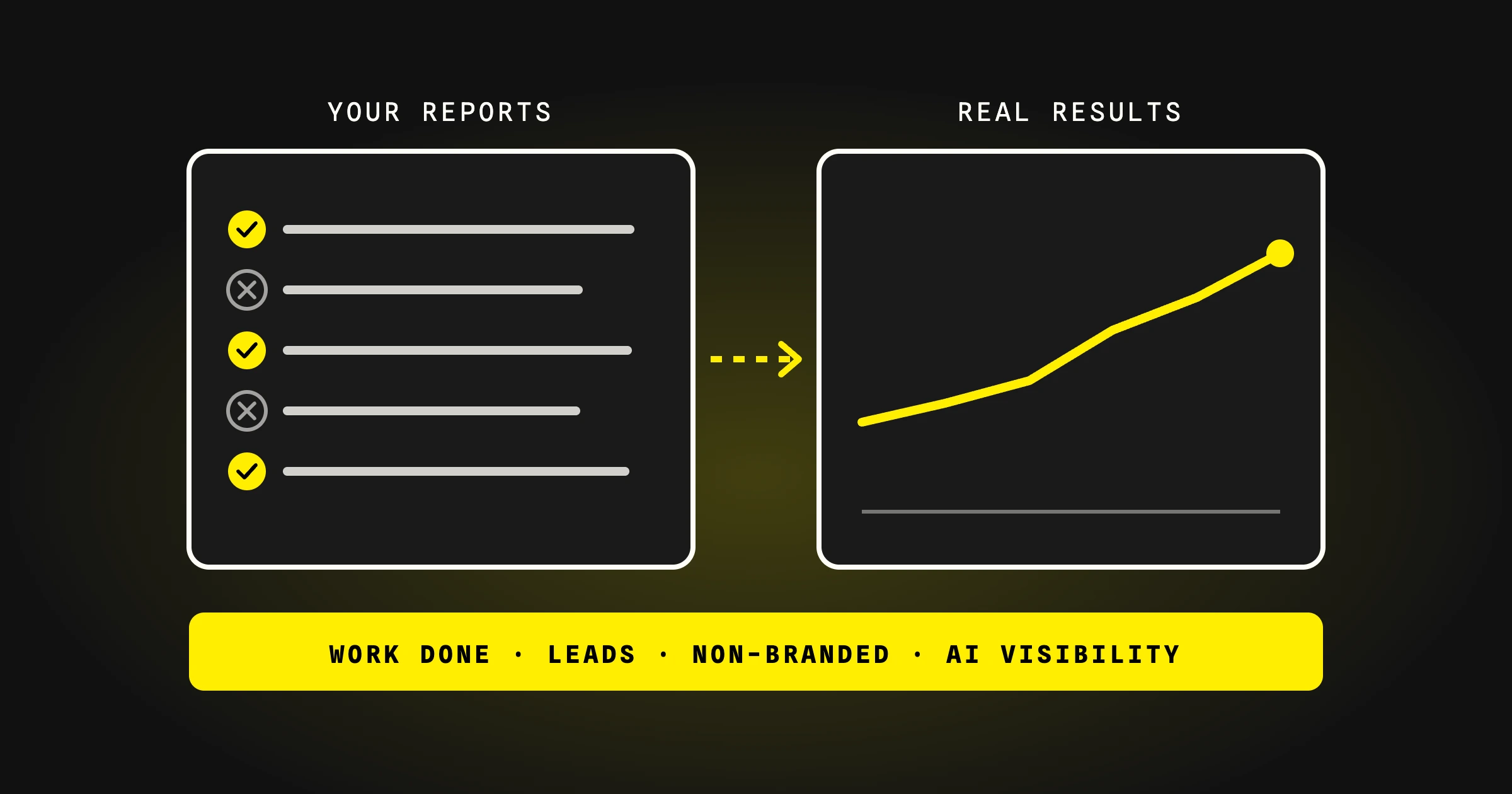
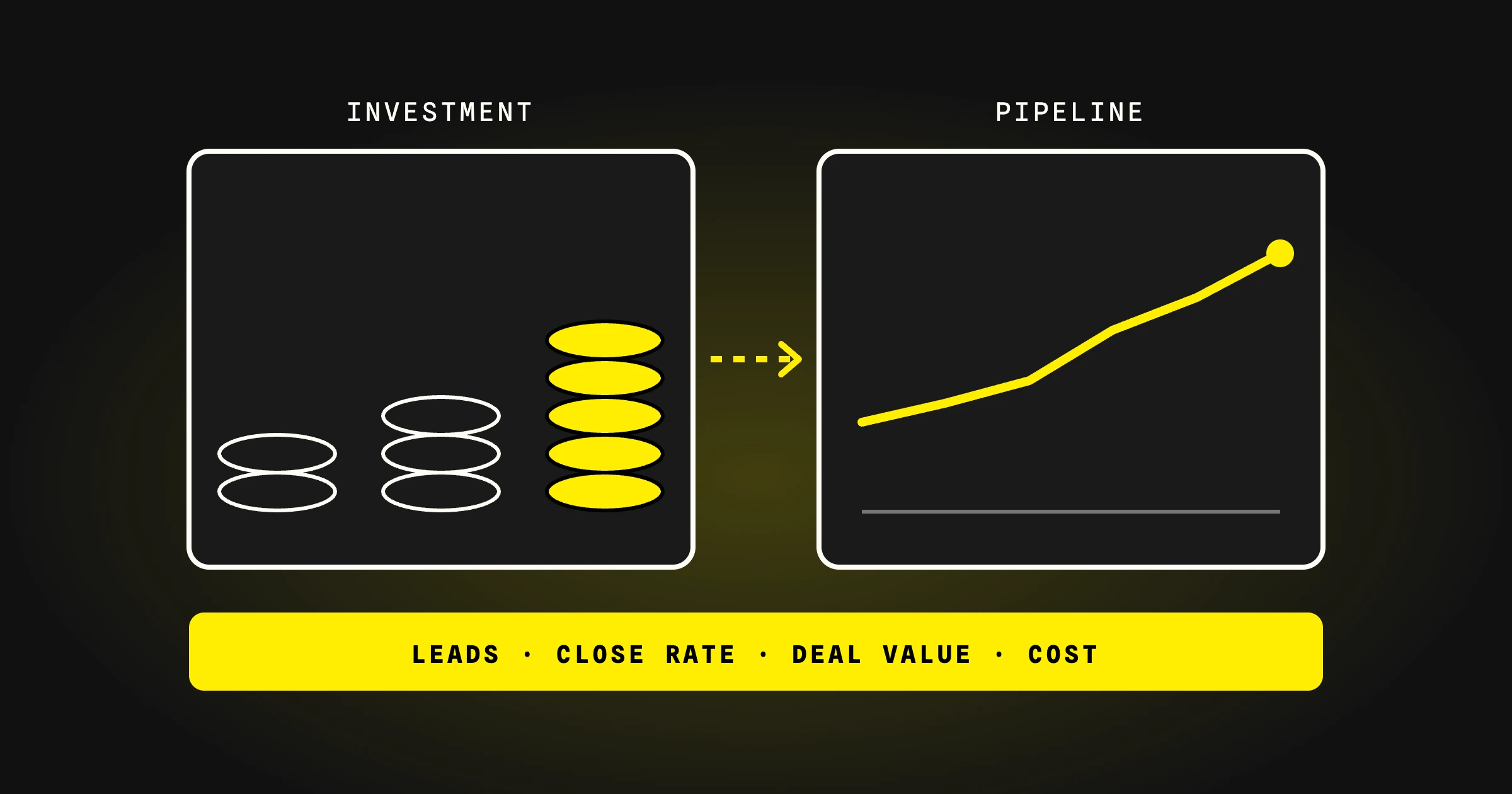
An SEO report for leadership should answer three questions on one page: what did we invest, what did it produce, and what happens next. Lead with leads, pipeline and revenue from organic search, show cost per lead and non-branded growth, add AI visibility, and keep rankings and technical detail for the working team.
In short
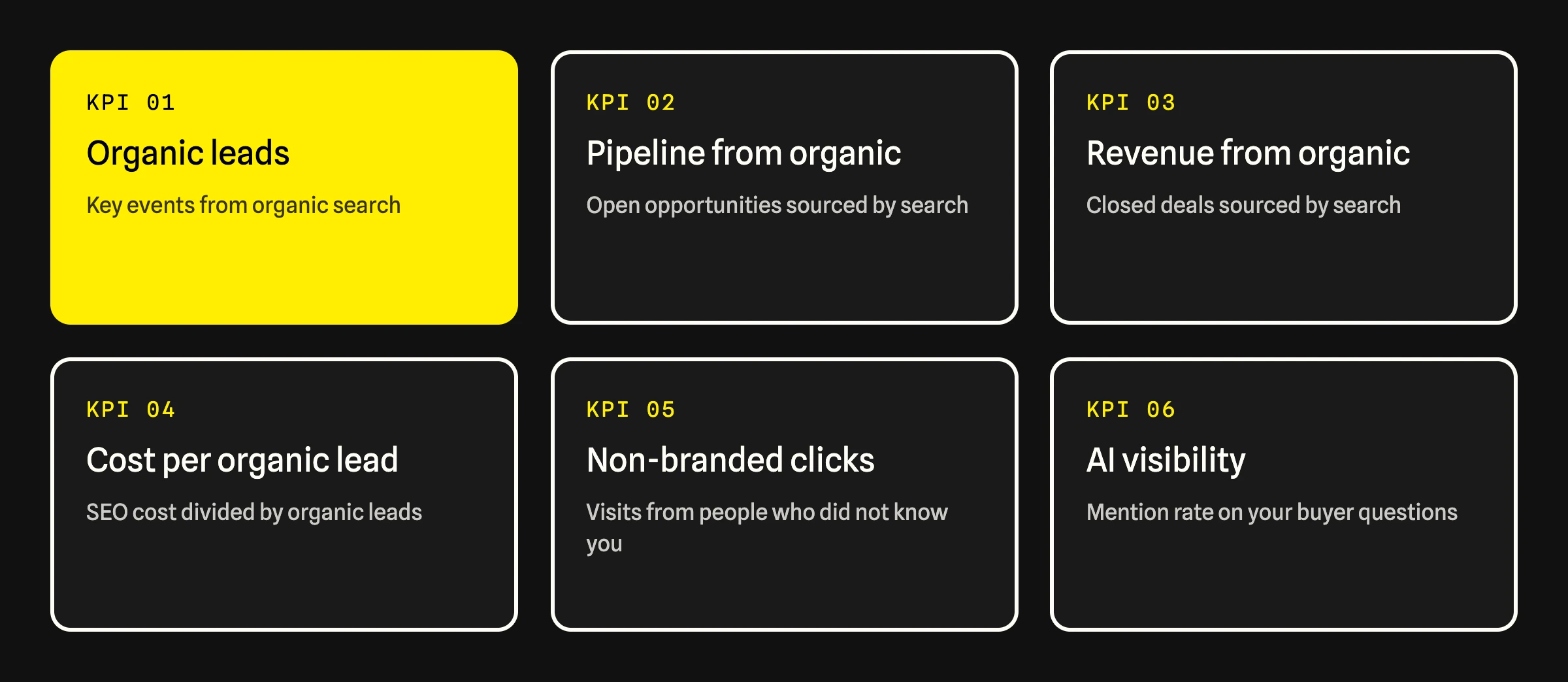
Leadership needs six KPIs: organic leads, pipeline, revenue, cost per lead, non-branded clicks and AI visibility.
Rankings, impressions and backlinks are diagnostics. Keep them in the appendix.
Report pipeline alongside revenue, because B2B deals take months to close.
Clicks alone now undercount results: AI summaries answer many searches without a visit.
Every report should end with what was done, what is next and what it should produce.
Clicks when an AI summary shows
8%
of Google visits with an AI summary ended in a click on a result, vs 15% without one (Pew Research Center, 2025). Traffic alone no longer tells the story
Average B2B buying cycle
11.3 mo
average length of a B2B buying cycle (6sense Buyer Experience Report, 2024). Report pipeline, not only closed revenue
Before SEO shows results
4 to 12 mo
the time SEOs need to implement improvements and then see potential benefit, according to Google's Maile Ohye (2017)
What Does Leadership Want From an SEO Report?
A CEO or board member reads an SEO report to decide one thing: keep investing, invest more, or stop. They want to know what was spent, what came back and what is planned. They do not want forty rows of keywords.
Most SEO reports fail that test. They are written by specialists for specialists, full of rankings, impressions and crawl statistics. Those numbers matter to the people doing the work. To leadership they are noise, and noise makes a program look like a cost.
Which SEO KPIs Should Leadership See?
Six are enough. Each one answers a question a CEO would ask.
The six KPIs that belong on the first page.
KPI
The question it answers
Where it comes from
Organic leads
Is search bringing us buyers?
GA4 key events from organic search
Pipeline from organic
Are those leads real opportunities?
CRM, by lead source
Revenue from organic
What did it return?
CRM, closed deals by lead source
Cost per organic lead
Is it efficient compared with other channels?
SEO cost divided by organic leads
Non-branded clicks
Are we reaching people who did not know us?
Search Console, queries without the brand name
AI visibility
Do AI assistants mention us when buyers ask?
A monthly check of fixed buyer questions
Show each one with the change against the previous period and against the same period last year. A number without a comparison tells leadership nothing.
Which Metrics Should Stay Out of the Leadership Report?
Keep these in the working report or an appendix. They explain why the KPIs moved, but they are not results.
Keyword rankings. Useful for diagnosis. A ranking is not a lead.
Impressions. An early signal, not an outcome.
Total organic sessions. Mixes branded with non-branded, and falls when AI answers absorb clicks.
Backlink counts and authority scores. Third-party estimates that leadership cannot act on.
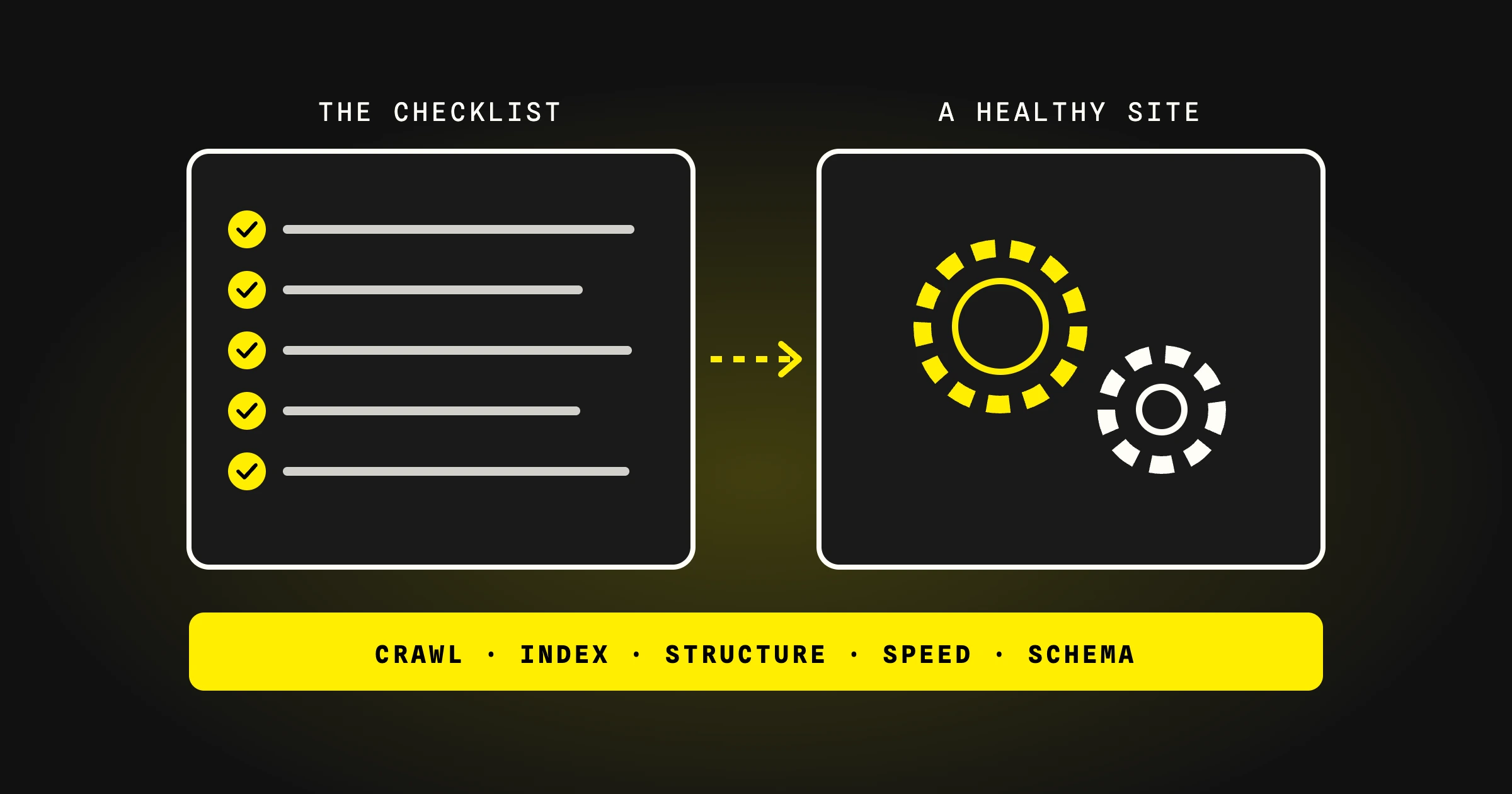
Technical health scores. Belong with the people fixing the site.
Use the so-what test. For every number on the page, ask what leadership would do differently because of it. If the answer is nothing, move it to the appendix.
Why Are Clicks No Longer Enough?
Reports built on traffic now understate results. Pew Research Center found that Google users clicked a result in 8% of visits when an AI summary appeared, against 15% without one, and only 1% clicked a link inside the summary. A page can be read, quoted and trusted without producing a visit.
8%
Pew Research Center · March 2025 data
Share of Google visits with an AI summary that ended in a click on a result, against 15% without one. Report leads and AI visibility, not sessions alone.
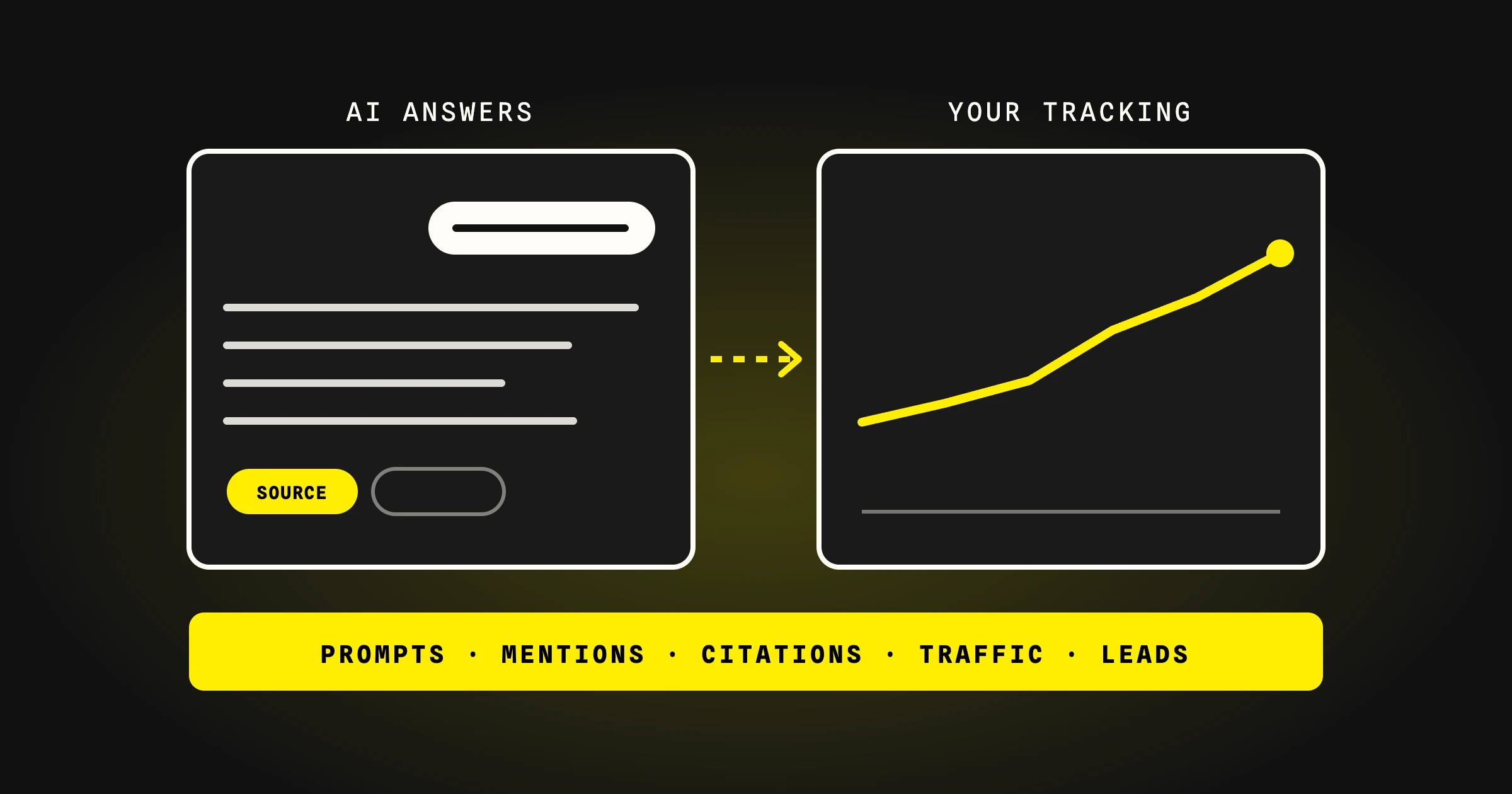
That is why AI visibility belongs on the first page. If traffic falls while leads hold and AI mentions rise, the program is working, and leadership needs to see all three to understand it. Our guide on how to measure AI visibility shows how to produce that number.
How Do You Report Results That Take Months?
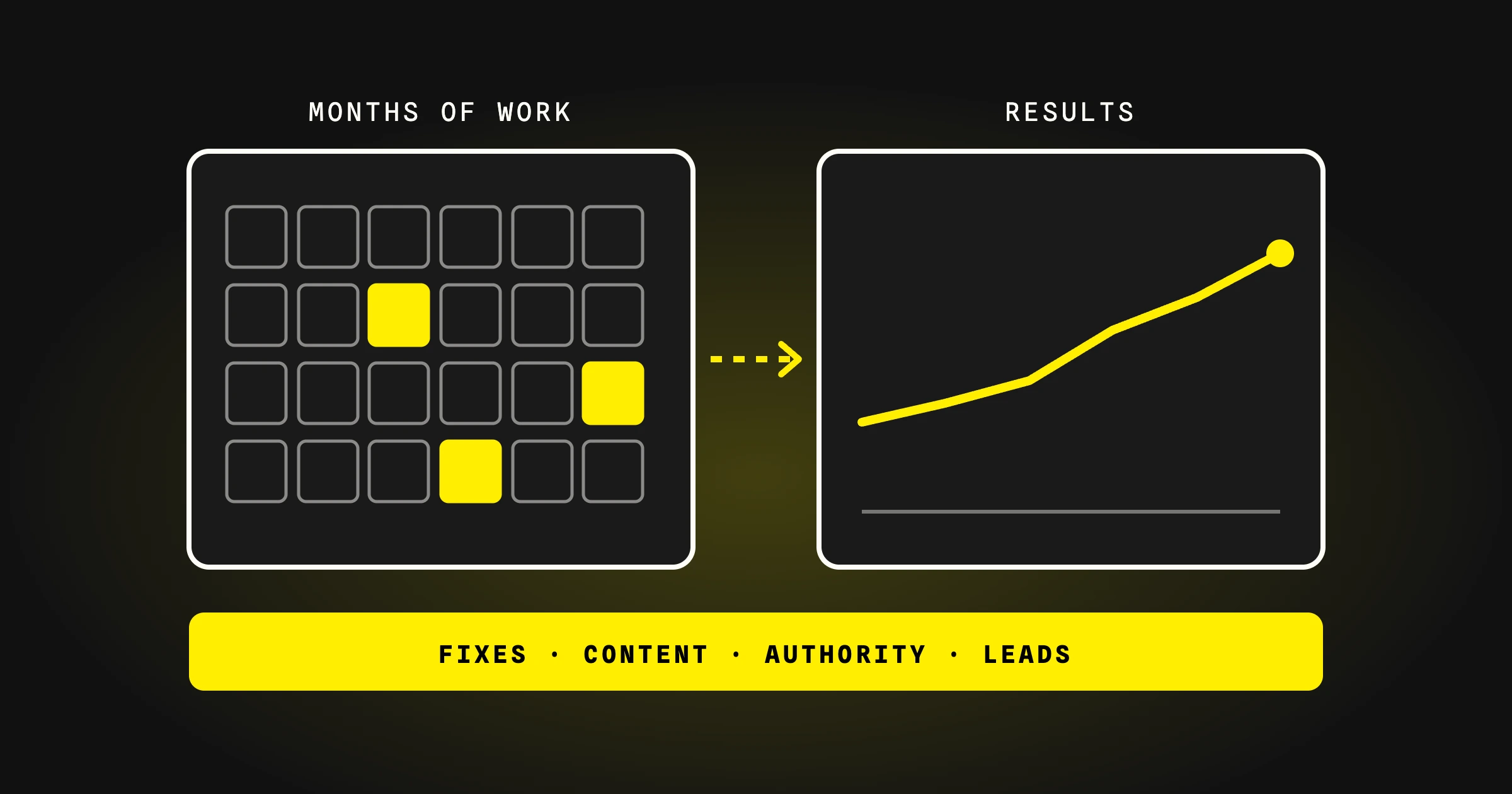
Two delays shape the story. Google estimates SEO needs four months to a year to show benefit, and 6sense puts the average B2B buying cycle at 11.3 months. Revenue from this quarter's SEO work may not close until next year.
So report in three layers, and say which layer you expect to move:
Leading signals. Non-branded clicks and AI visibility. These move first.
Pipeline. Leads and opportunities from organic search. These move next.
Revenue. Closed deals. These move last.
Set the expectation at the start, so a quarter with strong signals and little revenue reads as on track. For the stages, see how long SEO takes.
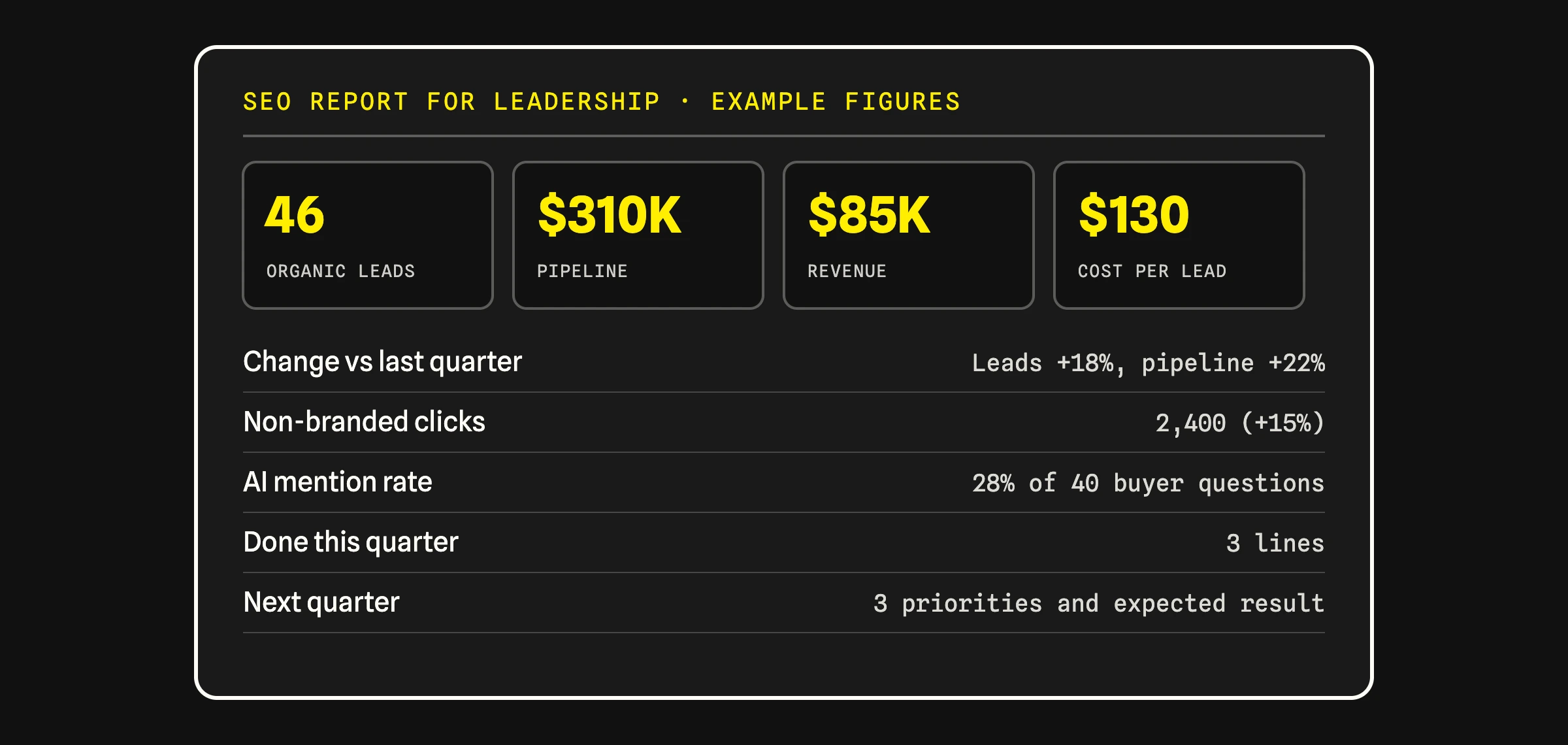
What Does a One-Page SEO Report Look Like?
A one-page layout. The figures shown are examples.
Section
What goes in it
Length
Headline
One sentence: what happened this period
1 line
Results
Leads, pipeline, revenue and cost per lead, each with the change
4 numbers
Reach
Non-branded clicks and AI visibility, with the change
2 numbers
Investment
What was spent, and ROI to date
2 numbers
Done
The work that mattered most
3 lines
Next
Priorities for the coming period and what they should produce
Monthly to the marketing lead: the six KPIs plus the working detail.
Quarterly to leadership: the one-page report, with trends.
Yearly to the board: investment, return and the plan.
SEO moves slowly enough that monthly swings mislead. Quarterly is the right rhythm for decisions.
What Needs to Be in Place First?
The six KPIs depend on tracking that many companies do not have:
Lead actions marked as key events in GA4. Google defines a key event as an event that measures an action particularly important to the success of your business.
A lead source field in the CRM, filled automatically from the form.
A branded and non-branded split saved in Search Console.
A fixed list of buyer questions for the AI visibility check.
If your agency reports rankings because it cannot report leads, the tracking is the first thing to fix. Our guide Is your SEO agency working? covers what to ask.
The Bottom Line
Leadership funds what it understands. Put six KPIs on one page, compare each with the last period, explain what was done and what is next, and keep the diagnostics for the team. A report built this way turns SEO from a line of cost into a channel with a return.
If you need help setting up the tracking or the report, our SEO consulting team builds both as part of a 90-day roadmap. To see what your current reports are missing, start with a free SEO report.
FAQ
What KPIs should an SEO report include?
For leadership, six: leads from organic search, pipeline from organic, revenue from organic, cost per organic lead, non-branded clicks and AI visibility. Rankings, impressions and technical scores belong in the working report.
How often should SEO be reported to the CEO?
Quarterly works best. SEO moves slowly, so monthly changes can mislead. Give the marketing lead a monthly view and leadership a one-page quarterly report with trends.
Should an SEO report include keyword rankings?
Not on the leadership page. Rankings help the team diagnose what is happening, but they are not a business result. Show the leads and pipeline those rankings produced.
How do you report SEO when traffic is falling?
Show leads, non-branded clicks on buyer searches and AI visibility next to traffic. AI summaries reduce clicks even when rankings hold, so a traffic drop with steady leads and rising AI mentions is not a failure.
5.0 on Clutch · 350+ companies served
Get a Free SEO Report.
A senior strategist reviews your site and walks you through it on a 30-minute call. No sales pitch, and you keep the report either way. It includes:
Andrés founded Digital Socios and Glued and leads Digital Socios' AI search work. He has spent 8+ years building websites and user experiences for brands like Nestlé, Vital Proteins and Pfizer.