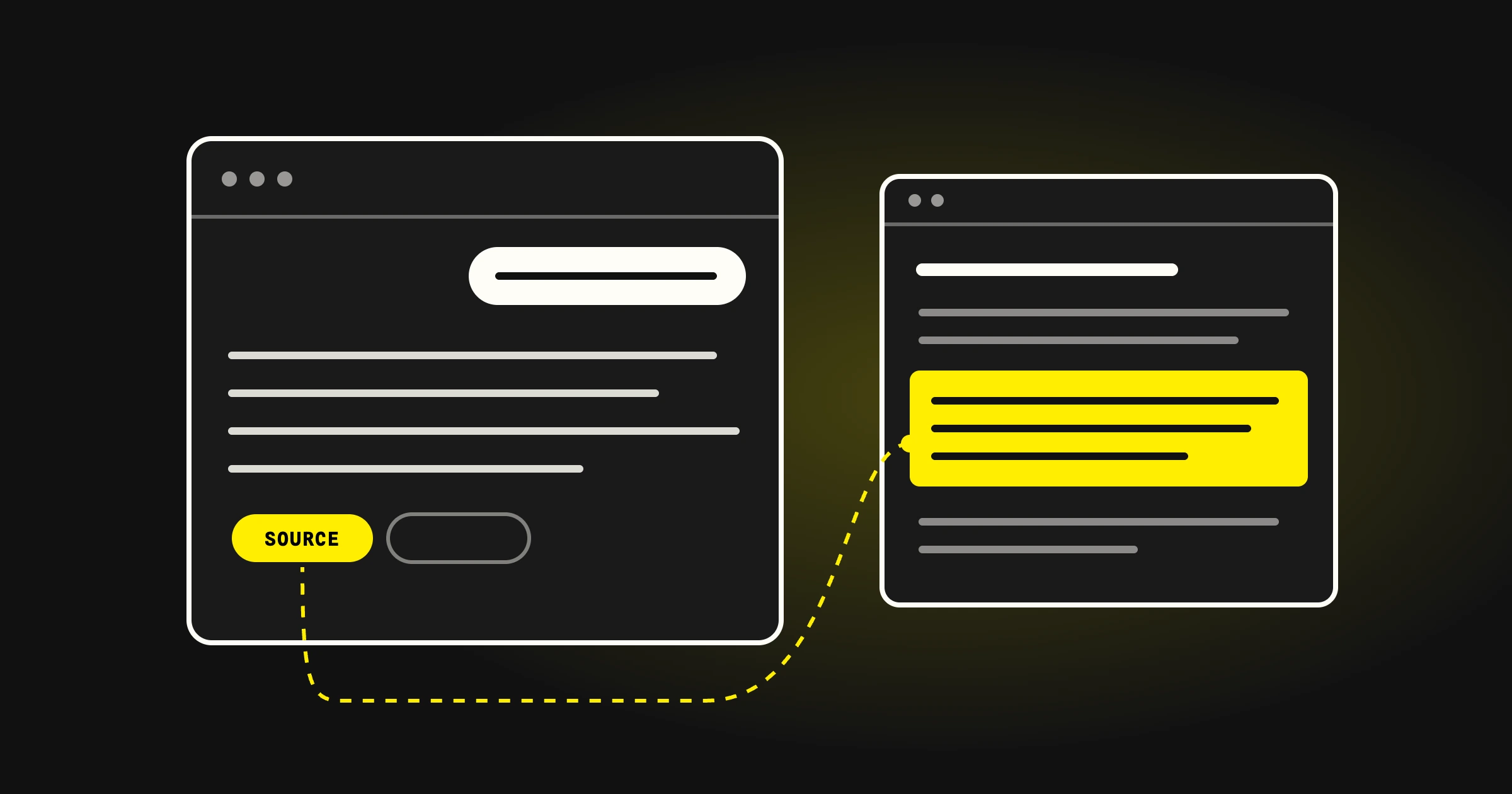
Answer engine optimization (AEO) is the practice of structuring your content, structured data and brand information so AI answer engines such as ChatGPT, Perplexity, Gemini and Google AI Overviews can find it, understand it and cite it. SEO aims to rank a page. AEO aims to be the source an AI system quotes when it answers your buyer's question.
In short
AEO builds on SEO: AI assistants still rely on pages search engines can crawl, index and trust.
Put a direct 40 to 60 word answer at the top of each page and section, under a heading that matches the question.
Attribute every number, add schema that matches the page and describe your company the same way everywhere.
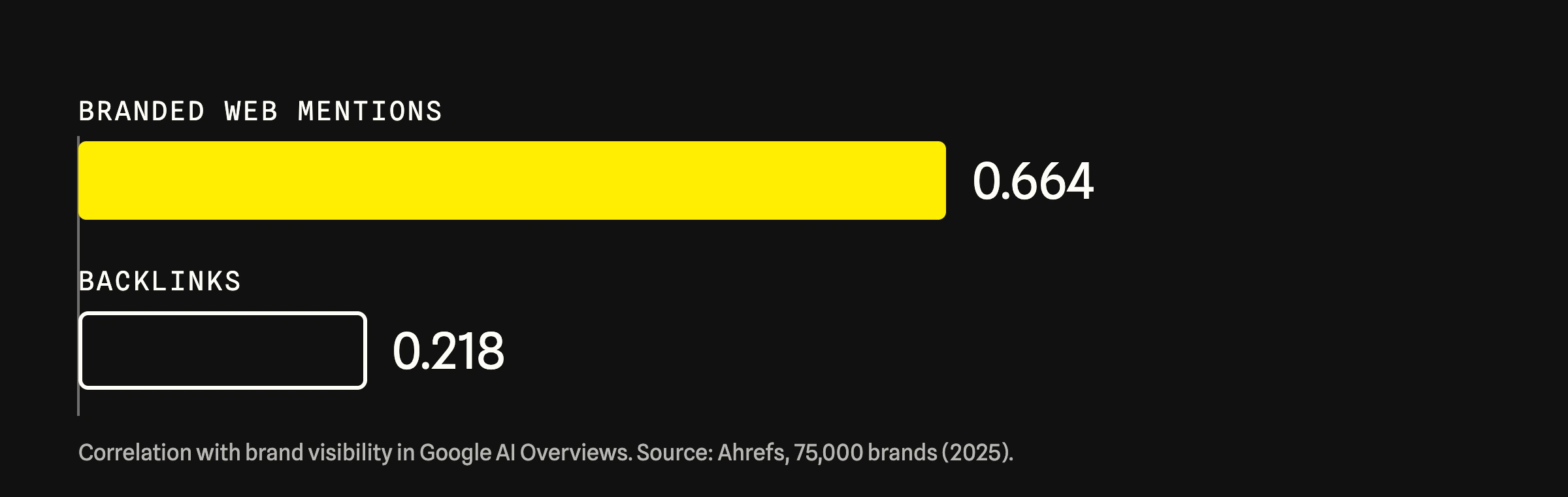
Mentions matter: in Ahrefs' study of 75,000 brands, branded web mentions tracked AI Overview visibility far more closely than backlinks.
Clicks when an AI summary shows
8%
of Google visits with an AI summary ended in a click on a result, vs 15% without one (Pew Research Center, 2025)
ChatGPT weekly users
800M
weekly active users, announced by OpenAI in October 2025 (TechCrunch)
Mentions vs AI visibility
0.664
correlation of brand mentions with AI Overview visibility, vs 0.218 for backlinks (Ahrefs, 2025)
What Is Answer Engine Optimization?
Answer engine optimization is the work of making your content the source AI systems quote. A classic results page returns ten links and lets the searcher choose. ChatGPT, Perplexity, Gemini and Google's AI Overviews read several sources, combine them into one answer and show only a few citations.
That changes what winning looks like. Ranking well still matters, because AI assistants lean on pages search engines already trust. But if your page is not one of the sources an answer cites, a buyer can get what they need without ever seeing your brand.
8%
Pew Research Center · March 2025
Google users who saw an AI summary clicked a traditional result in 8% of visits, against 15% when no summary appeared. Being the cited source is how you stay visible.
AEO vs SEO vs GEO: What Is the Difference?
The three terms overlap, and most of the work is shared. GEO here means generative engine optimization, not local geo-targeting.
Factor
SEO
AEO
GEO
Goal
Rank pages in search results
Be quoted as a source in AI answers
Be described correctly and recommended by AI
Where it shows
Google and Bing results
AI Overviews, ChatGPT, Perplexity, Gemini
AI shortlists and comparisons
Success metric
Rankings, traffic, conversions
Citations for a set of buyer questions
Mentions, recommendations, accuracy
Main levers
Technical health, content, links
Direct answers, structure, schema, attributed data
Entity consistency, mentions, reviews
For the full comparison and what to do first, read SEO vs AEO vs GEO.
How Do AI Answer Engines Choose Their Sources?
Each platform works a little differently, but they share one pattern. Knowing it tells you what to change on a page.
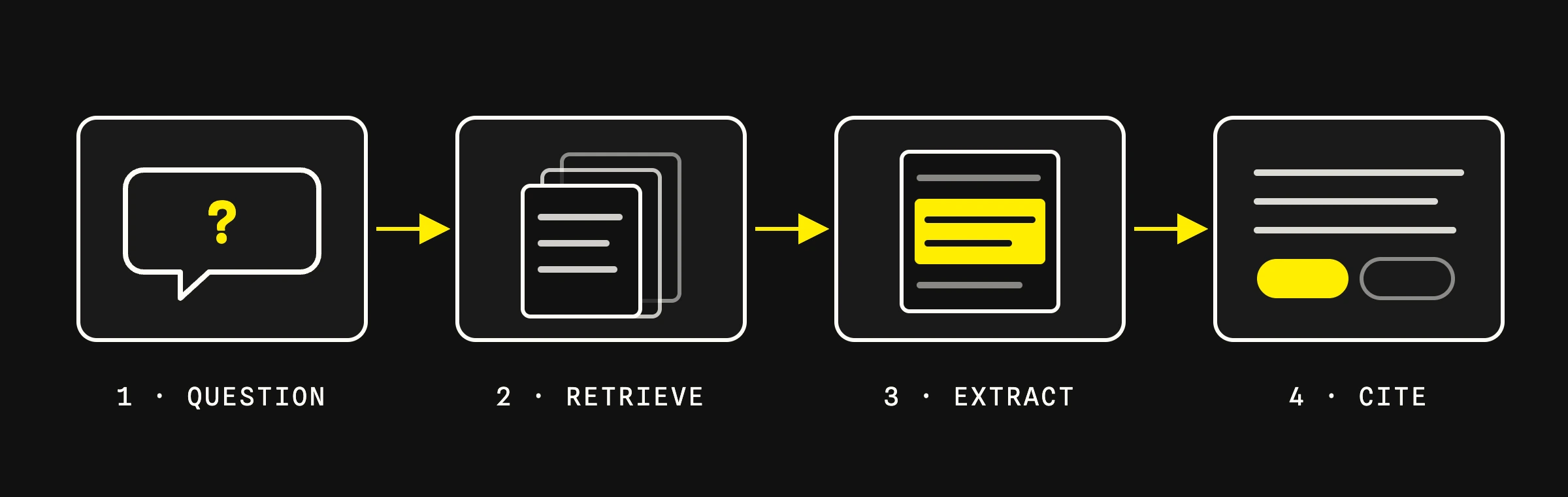
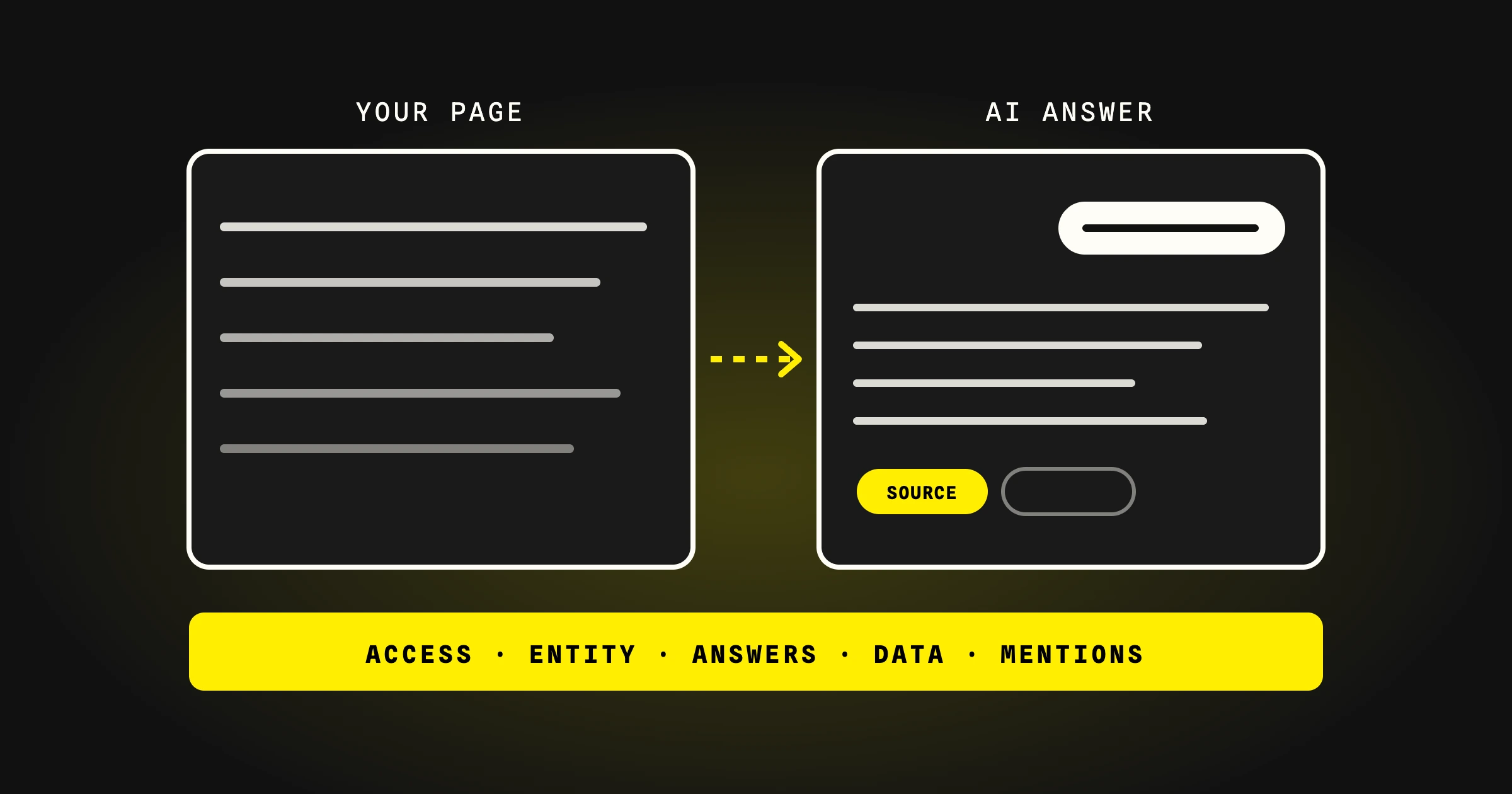
How an answer engine gets from a question to a citation.
1. They interpret the question. Buyers ask in full sentences, such as "what CRM should a 50-person SaaS company use with HubSpot", not "best CRM".
2. They retrieve candidate pages. Perplexity and ChatGPT search the web in real time; Google's AI Overviews draw on Google's own index.
3. They extract the passage that answers. A clear, self-contained paragraph under a matching heading is easier to lift than an answer buried in a long introduction.
4. They cite sources they can trust. Consistent company facts, named authors and attributed data make a page safer to quote.
Write for the passage, not the page. AI systems extract in chunks. Every section should make sense on its own, with the answer in its first two sentences.
The AEO Checklist
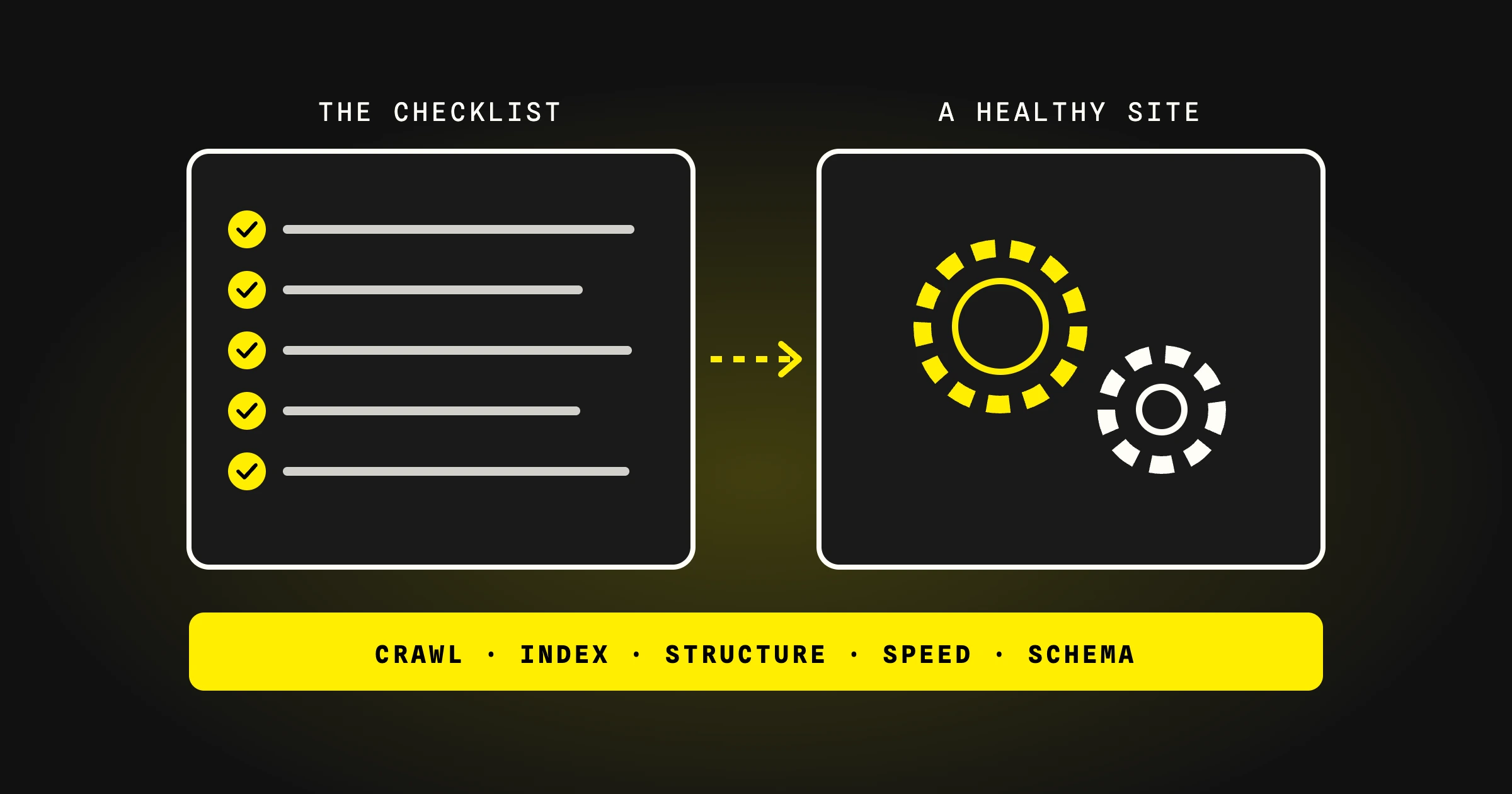
These are the areas we review in every AEO audit, in the order they usually pay off. For the step-by-step version, see how to get cited in AI answers.
Open each page and each main section with a 40 to 60 word answer that makes sense on its own: who it is for, what it is and the key fact. Then expand.
Attributed data
State the source, the year and what was measured for every number, and link to it. AI systems repeat what they can verify; unattributed claims get passed over for a competitor who did the work.
Schema and entity facts
Markup must match the visible page. Describe your company, services and people the same way on your site, LinkedIn, directories and review sites, so every source tells the same story.
Why Brand Mentions Matter for AI Visibility
Traditional SEO built authority mainly through backlinks. AI visibility appears to depend more on how often and how consistently your brand is mentioned. In Ahrefs' study of 75,000 brands, branded web mentions correlated with AI Overview visibility at 0.664, against 0.218 for backlinks. That does not make links worthless, but mentions in industry publications, reviews, podcasts and communities deserve a place in the plan.
How Do You Measure AEO?
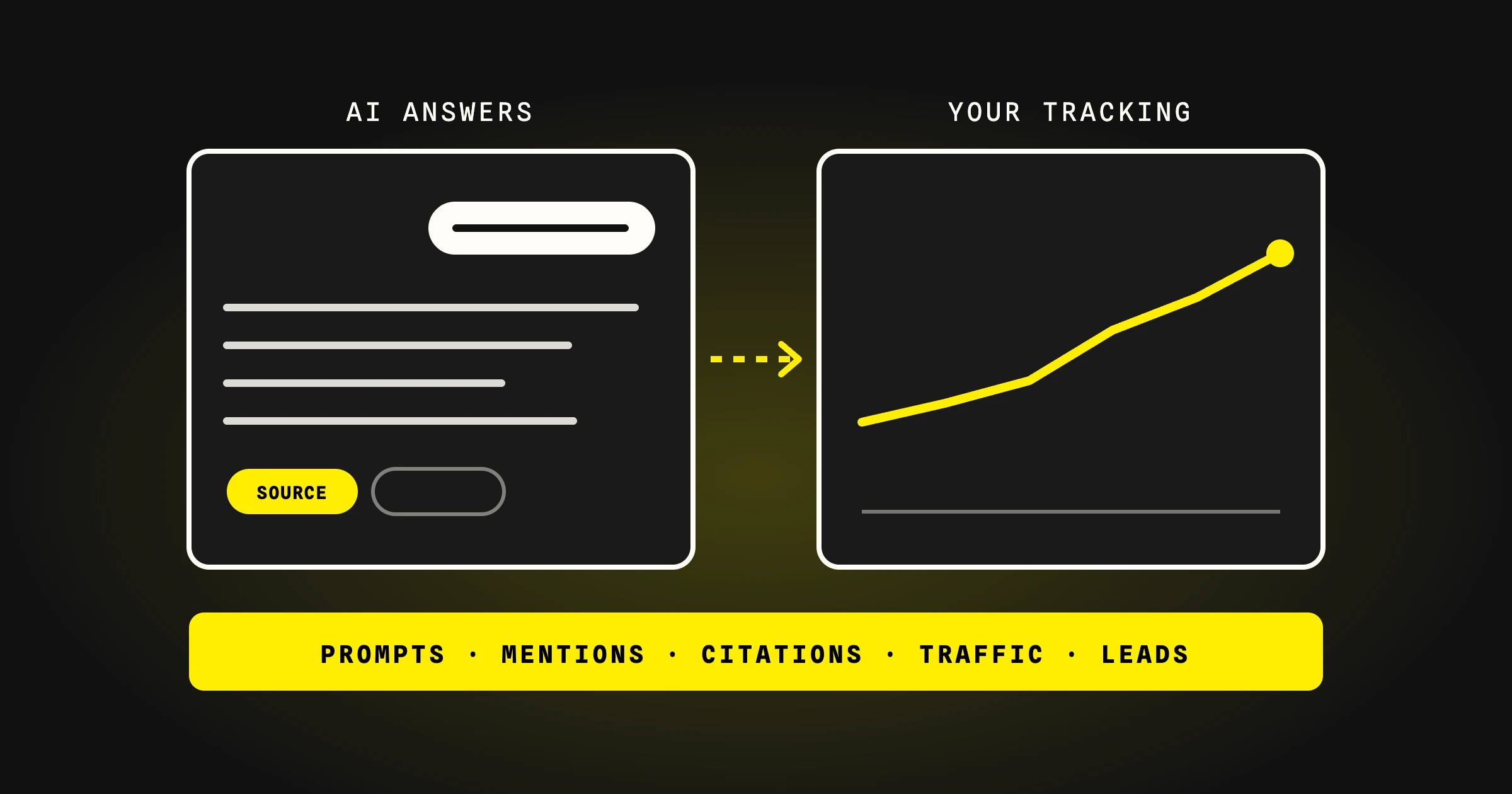
Rankings alone don't show AI visibility. A working setup answers four questions:
Question
What to track
Examples
Where are we cited?
Citations for a fixed set of buyer prompts
Monthly prompt runs in ChatGPT, Perplexity, Gemini and AI Overviews
Who appears instead?
Competitor citations and mentions
The same prompt set, with a competitor column
Is AI sending visits?
AI referral traffic
GA4 sessions from chatgpt.com, perplexity.ai and gemini.google.com
Is demand growing?
Branded search
Branded queries in Google Search Console
Our AEO audit sets up this tracking and runs the first round of prompts for you. To do it yourself, follow our guide on how to measure AI visibility.
Common AEO Mistakes
Burying the answer after a long introduction.
Statistics with no source or date.
Schema that is missing or doesn't match the page.
Describing the company differently on every platform.
Building links while ignoring brand mentions.
Treating AEO as separate from SEO instead of building on it.
The Bottom Line
AEO is not a new channel to bolt on. It is SEO done with the answer in mind: pages that can be crawled and trusted, answers that can be quoted, and a brand other sites talk about.
Start with the pages that already bring in leads. Our AEO audit checks what AI assistants say about you today, and our AEO agency team implements the fixes. Or start with a free SEO report.
FAQ
Is AEO the same as GEO?
They are closely related. AEO focuses on being cited when an AI system answers a question; GEO more broadly covers how AI systems describe and recommend your brand. The tactics overlap almost completely, so most companies can run them as one program.
How do you rank in ChatGPT or Perplexity?
You don't rank in the traditional sense; you get cited. Direct answers, attributed data, schema that matches the page, consistent company facts and brand mentions across trusted sources make your content easier to cite.
Does traditional SEO still matter?
Yes. AI assistants lean on pages search engines can crawl, index and trust, and most organic visits still come from classic results. AEO adds to SEO; it does not replace it.
Do I need different content for SEO and AEO?
No. The same page can serve both. Add a direct answer, question-led headings, attributed data and matching schema to the pages that already matter to your business.
5.0 on Clutch · 350+ companies served
Get a Free SEO Report.
A senior strategist reviews your site and walks you through it on a 30-minute call. No sales pitch, and you keep the report either way. It includes:
Andrés founded Digital Socios and Glued and leads Digital Socios' AI search work. He has spent 8+ years building websites and user experiences for brands like Nestlé, Vital Proteins and Pfizer.