SEO ROI is the revenue you can attribute to organic search, minus what you spent on SEO, divided by what you spent. To measure it, count leads from organic search in Google Analytics 4, follow them through your CRM to closed revenue, and compare that with the full cost of the program over the same period.
In short
SEO ROI = (revenue from organic search minus SEO cost) divided by SEO cost.
You need two things to measure it: key events in GA4 and a lead source field in your CRM.
Count the full cost: agency or salaries, content, developer time and tools.
In B2B, report pipeline alongside closed revenue, because the average buying cycle runs 11.3 months.
Split branded from non-branded traffic so SEO is not credited for demand it did not create.
Before SEO shows results
4 to 12 mo
the time SEOs need to implement improvements and then see potential benefit, according to Google's Maile Ohye (2017)
Average B2B buying cycle
11.3 mo
average length of a B2B buying cycle (6sense Buyer Experience Report, 2024)
Average agency retainer
$3,209
average monthly retainer for SEO agencies, Ahrefs' estimate from its pricing survey of 439 providers (2024)
What Is SEO ROI?
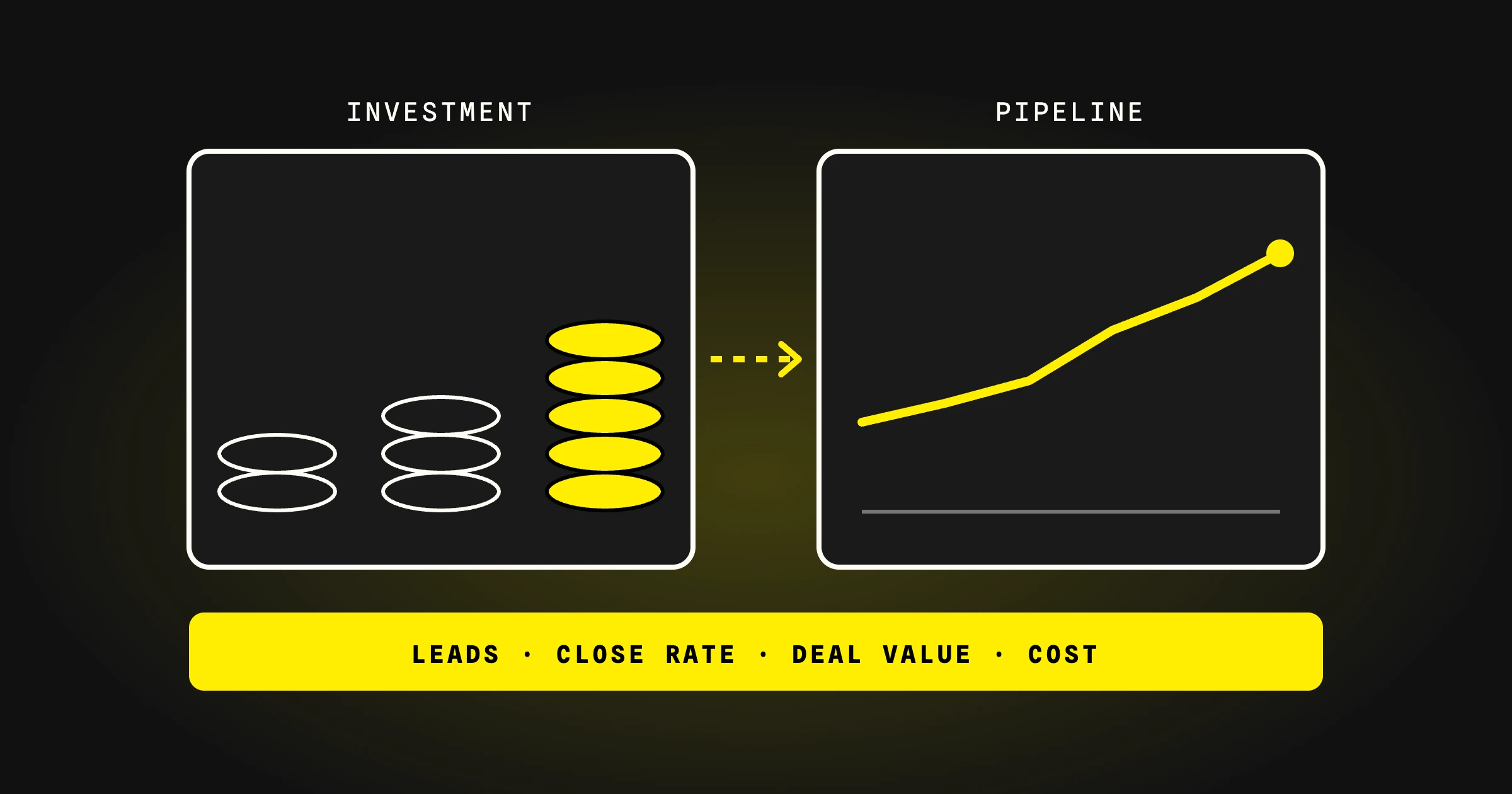
SEO ROI (return on investment) is the profit your SEO program produces for every dollar spent on it. The formula is short:
ROI
The formula
(Revenue from organic search minus SEO cost) divided by SEO cost. Multiply by 100 to express it as a percentage.
The formula is the easy part. The work is in getting two honest numbers into it: revenue that really came from organic search, and the full cost of earning it.
How Do You Calculate SEO ROI?
Work through four steps, using the same time period for each.
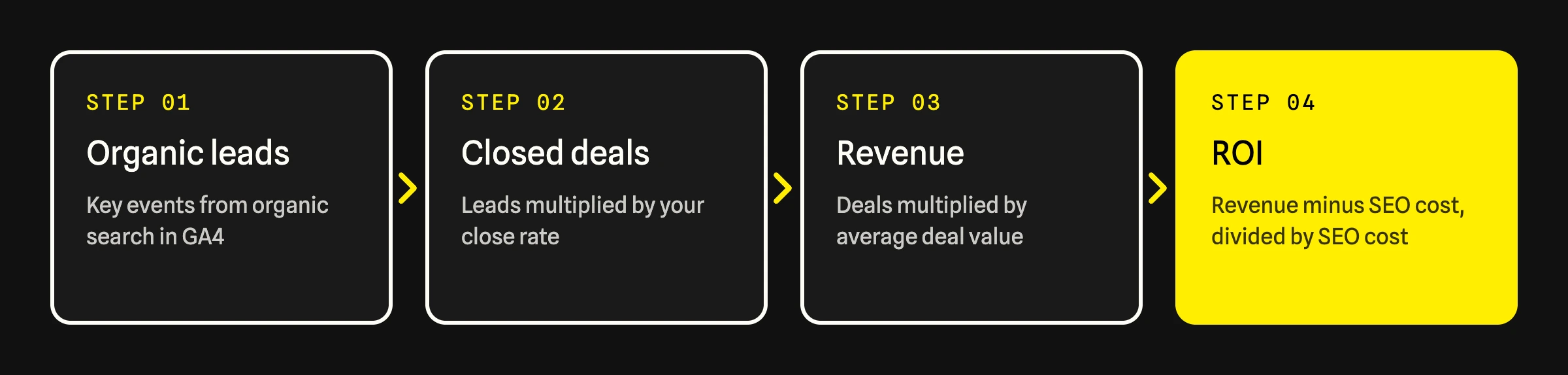
From organic leads to ROI in four steps.
Count organic leads. Key events from organic search in GA4: form submissions, demo requests and calls.
Apply your close rate. The share of those leads that became customers, from your CRM.
Multiply by deal value. Average first-year revenue per customer, or lifetime value if you track it.
Subtract the cost and divide. Net return divided by total SEO cost.
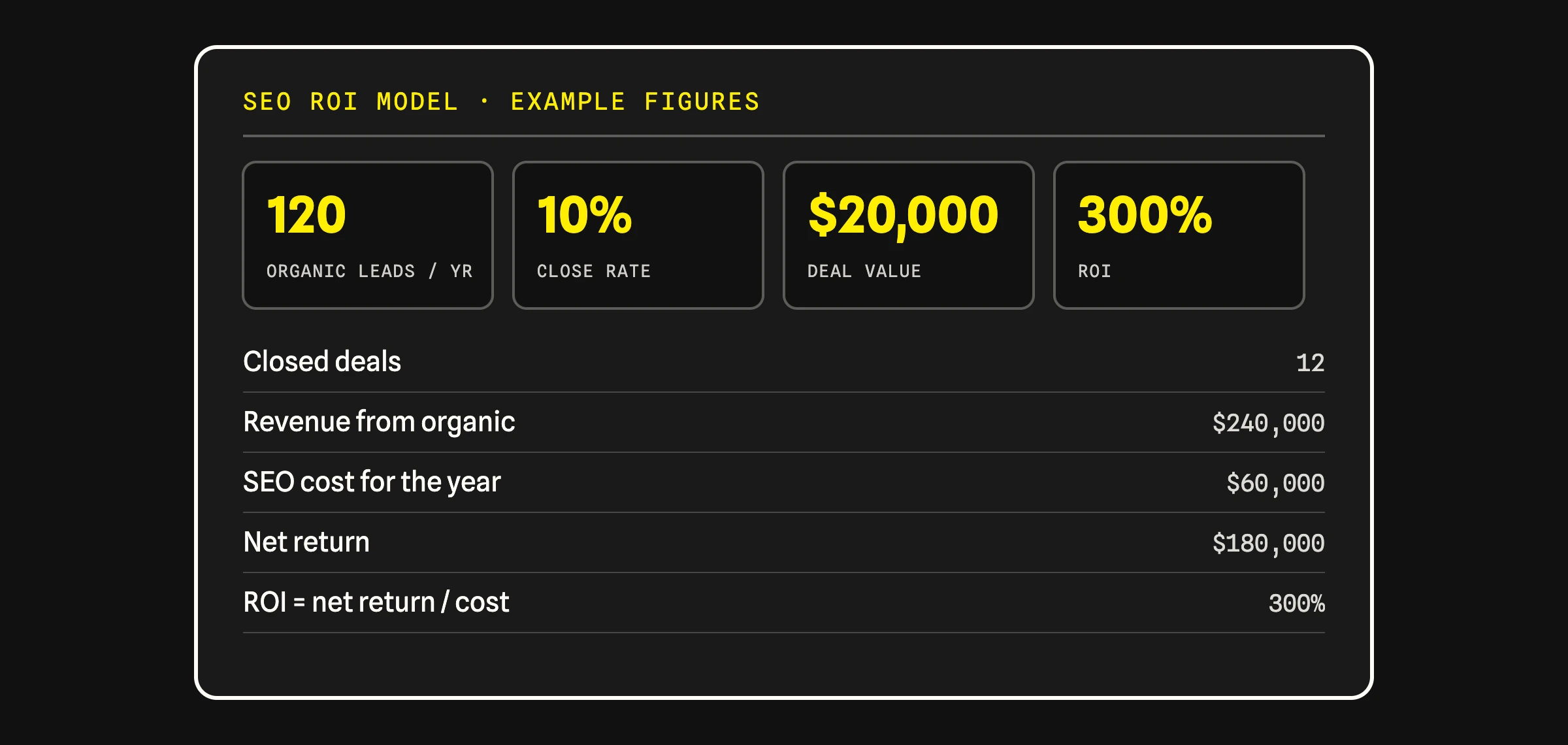
Here is the model with example figures. Replace them with your own.
Line
Example
Where the number comes from
Leads from organic search in a year
120
GA4 key events, organic search channel
Close rate
10%
CRM: closed deals divided by leads from that source
Closed deals
12
120 x 10%
Average deal value
$20,000
CRM or finance
Revenue from organic
$240,000
12 x $20,000
SEO cost for the year
$60,000
See the next section
Net return
$180,000
$240,000 minus $60,000
ROI
300%
$180,000 divided by $60,000
The same model on one page. The figures are examples, not benchmarks.
What Counts as SEO Cost?
Leaving costs out makes the ROI look better and the report less credible. Include all of these:
Agency or consultant fees. In Ahrefs' survey of 439 SEO providers, agencies averaged about $3,209 a month on retainer.
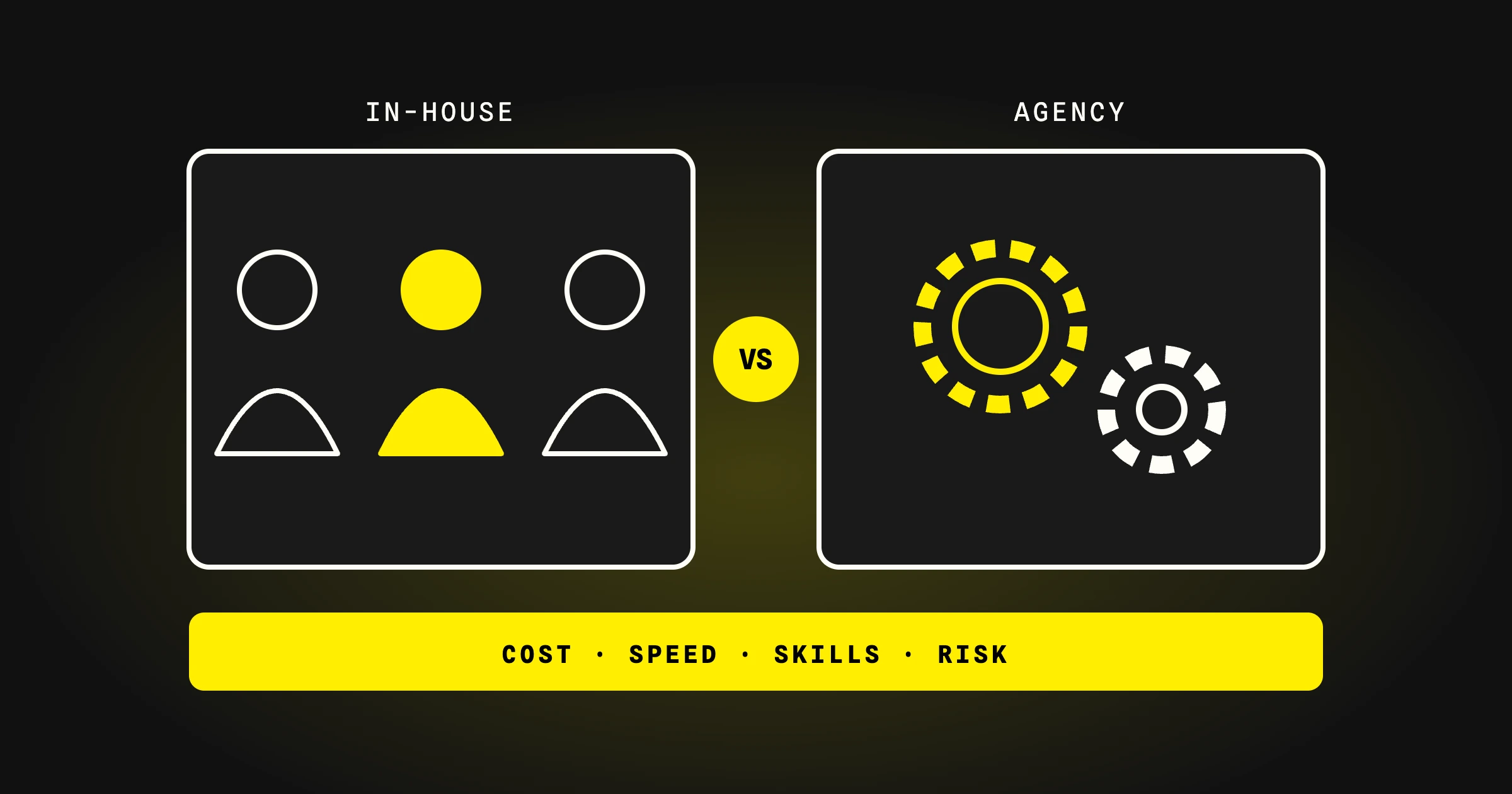
In-house time. The share of salaries spent on SEO and content. For a fuller cost comparison, see in-house SEO vs agency.
For how agencies price their work, see SEO pricing.
How Do You Attribute Revenue to Organic Search?
Attribution is where most SEO ROI figures fall apart. Four pieces make it hold.
Key events in GA4. Google defines a key event as an event that measures an action particularly important to the success of your business. Mark your lead actions as key events, or you can count visits but not leads.
A lead source in your CRM. Pass the channel into the CRM with every form submission, so each deal carries its source to the day it closes.
A branded and non-branded split. Someone who searches your company name already knew you. Report non-branded organic leads separately: they are the demand SEO created.
An AI assistants channel. Buyers who find you in ChatGPT or Perplexity often arrive later by another route. Our guide on how to measure AI visibility shows how to track them.
Fix tracking before you report ROI. If GA4 has no key events and the CRM has no source field, any ROI figure is a guess. Setting both up takes days, and every later report depends on them.
Why Does B2B SEO ROI Take Longer to Show?
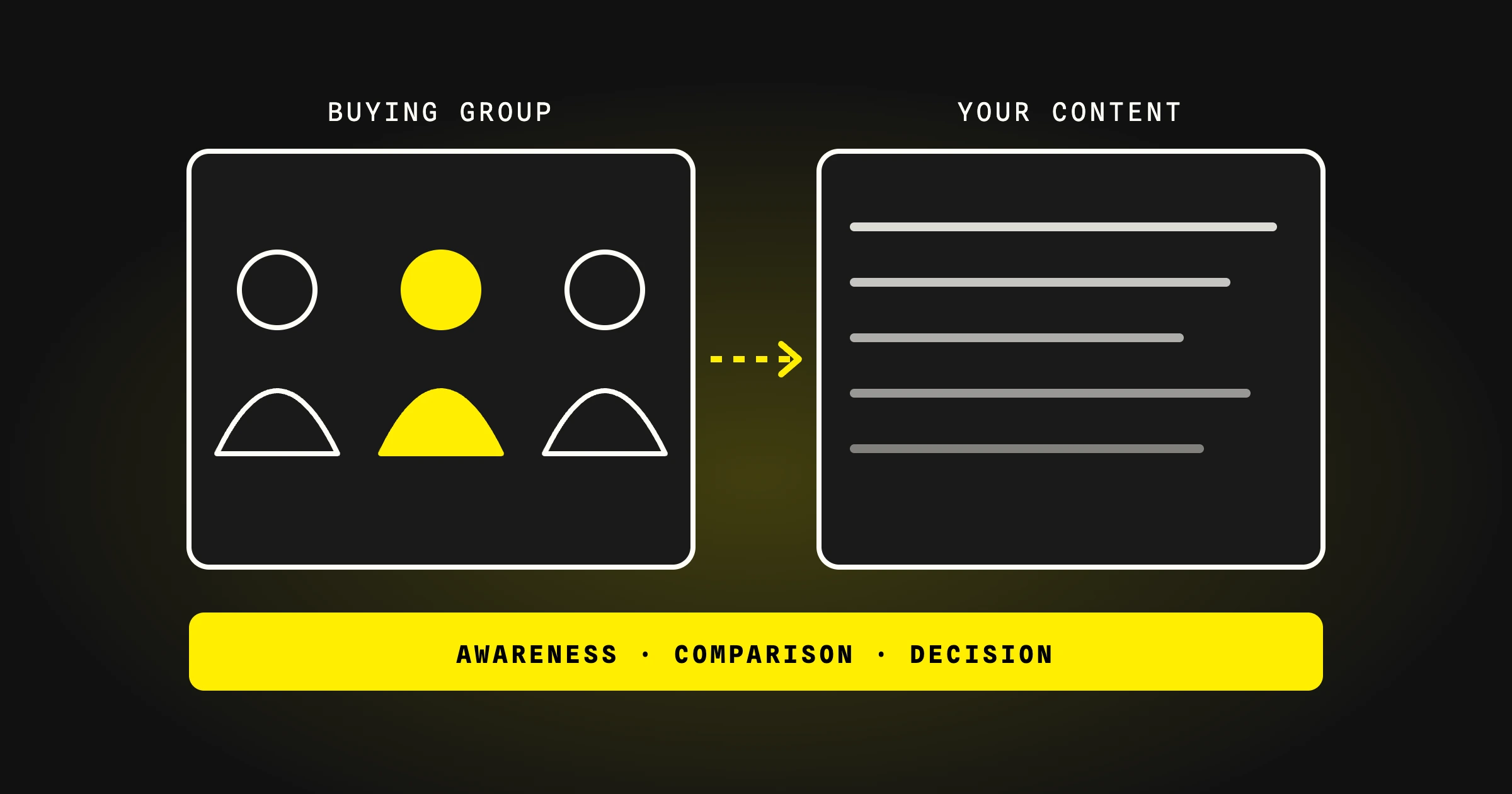
Two delays stack. SEO itself needs time: Google's estimate is four months to a year to implement improvements and see the benefit. Then the sale needs time: 6sense's 2024 Buyer Experience Report puts the average B2B buying cycle at 11.3 months, with 11 people in the average buying group.
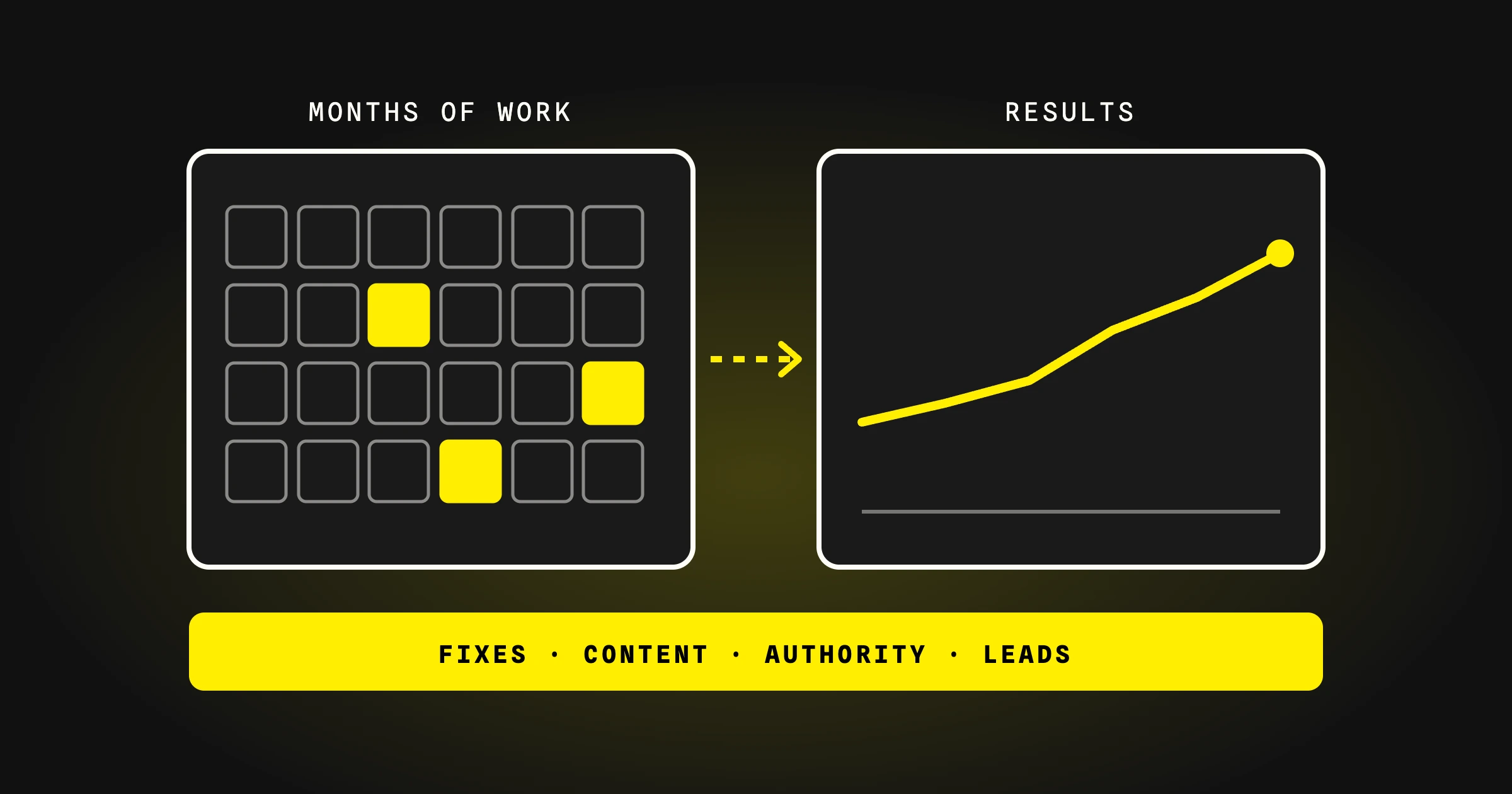
So a lead that arrives from search in month six may not close until the following year. If you only report closed revenue, SEO looks like a cost for a long time. Report three numbers side by side:
There is no reliable universal benchmark. Published averages mix industries, deal sizes and time frames, and most do not state their method. Two comparisons are more useful:
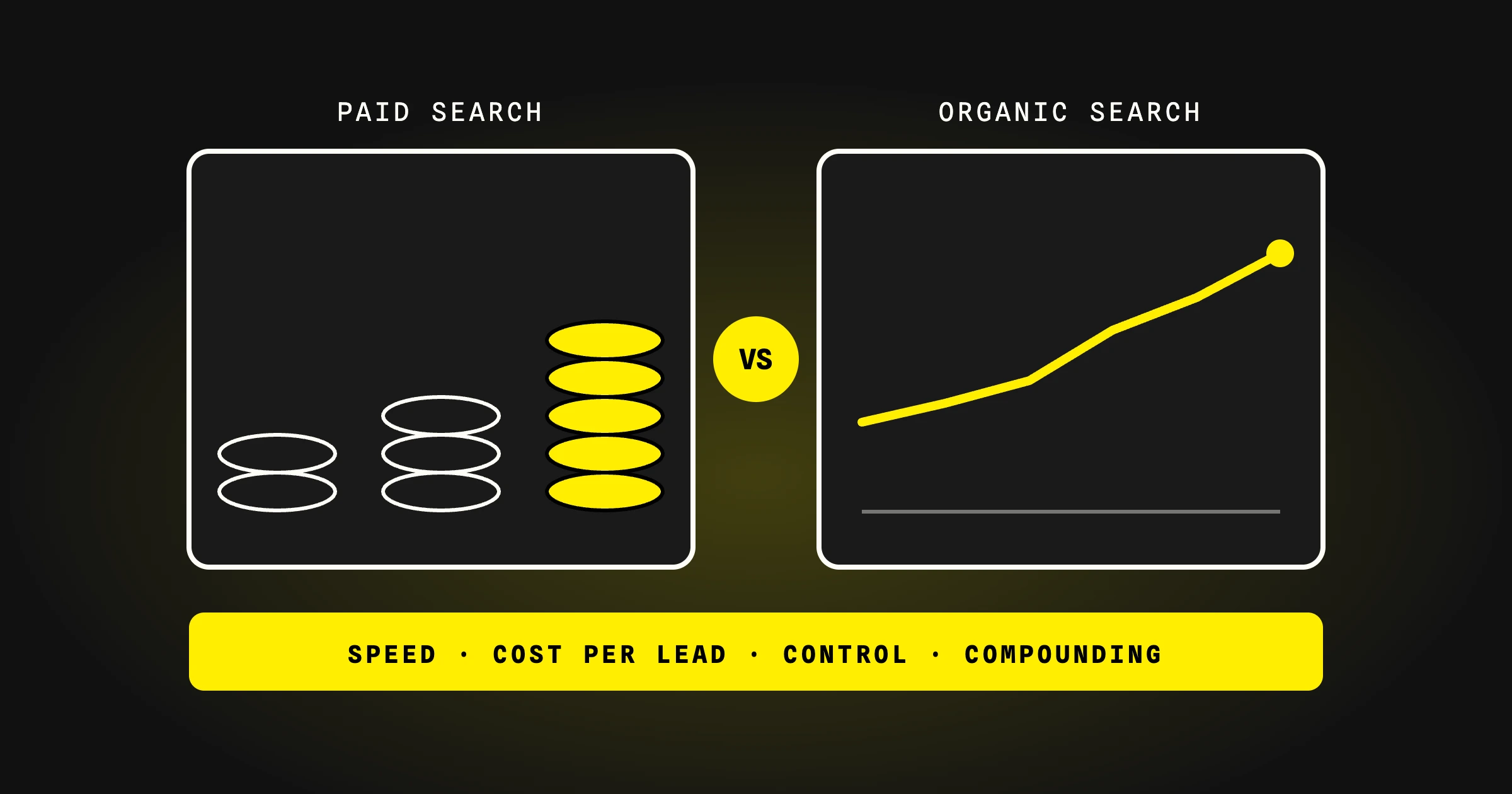
Against your other channels. Compare cost per lead and cost per closed deal from organic search with paid search over the same period.
Against itself over time. SEO costs stay fairly flat while results build, so cost per lead should fall from year one to year two. If it does not, something is wrong.
How Do You Present SEO ROI to Leadership?
Keep it to one page and lead with money.
What was invested this period.
Leads, pipeline and closed revenue from organic search, with non-branded shown separately.
ROI to date and the expected payback month.
What changed on the site, in three lines.
What happens next quarter and what it should produce.
Be open about what the model leaves out, such as buyers who saw you in search and came back another way. A conservative number that leadership trusts is worth more than a large one they do not.
The Bottom Line
SEO ROI is a simple formula fed by two disciplines: honest attribution and full costs. Set up key events and a CRM source field, split branded from non-branded, and report leads, pipeline and revenue together. For content that keeps buyers engaged through a long cycle, see B2B content marketing for long sales cycles.
SEO ROI equals revenue from organic search minus SEO cost, divided by SEO cost. Multiply by 100 for a percentage. Use the same time period for revenue and cost.
How long until SEO pays back?
It depends on how fast SEO produces leads and how long your sales cycle is. Google estimates four months to a year before SEO shows benefit, and B2B deals add their own cycle on top. Track pipeline to see payback coming before revenue lands.
Should branded traffic count toward SEO ROI?
Report it separately. Branded searches come from people who already know you, so they reflect demand created elsewhere. Non-branded organic leads are the clearest measure of what SEO added.
Can you measure SEO ROI without a CRM?
Only roughly. Without a CRM you can count leads from organic search in GA4 and apply an average close rate and deal value. With a CRM source field you can follow each lead to actual revenue.
5.0 on Clutch · 350+ companies served
Get a Free SEO Report.
A senior strategist reviews your site and walks you through it on a 30-minute call. No sales pitch, and you keep the report either way. It includes:
Andrés founded Digital Socios and Glued and leads Digital Socios' AI search work. He has spent 8+ years building websites and user experiences for brands like Nestlé, Vital Proteins and Pfizer.